13 Fantastic Nature Walks, Views, and Hikes to Do in Joshua Tree National Park
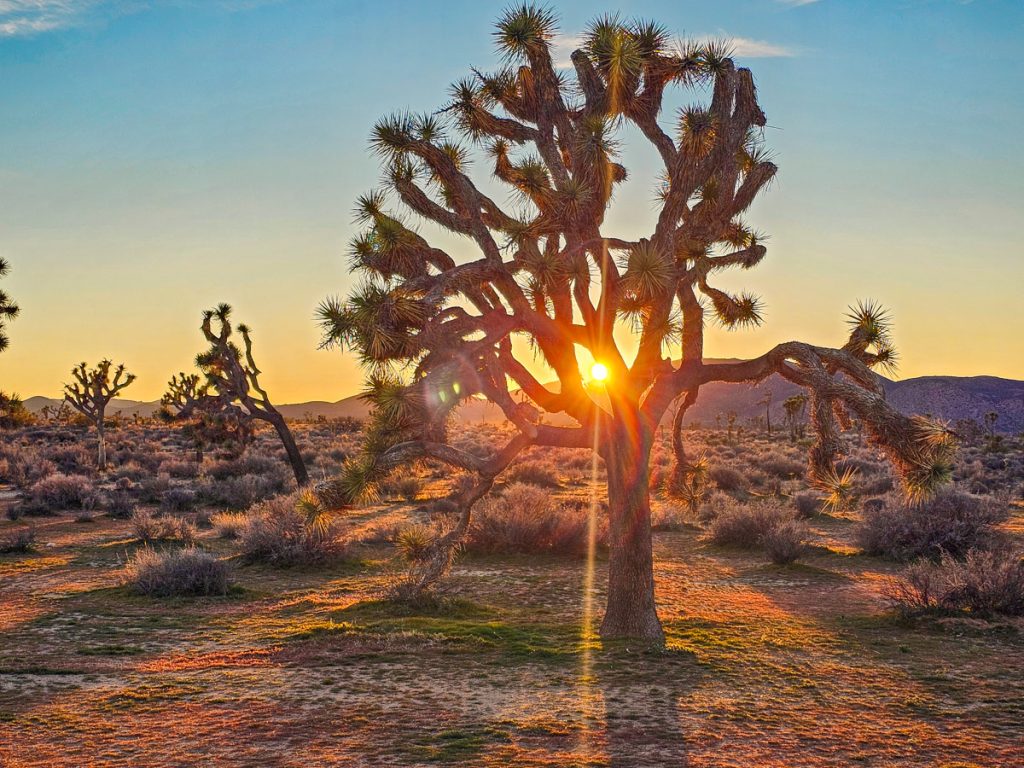
Joshua Tree National Park is named for its most iconic feature: the Joshua tree. These unusual plants grow primarily within the Mojave Desert in southern California and Nevada, with a small range extending into western Arizona.
The park contains an estimated 879,000 Joshua trees, and as you drive through, you’ll often see hills and valleys covered in what these unique trees stretching across the desert landscape.
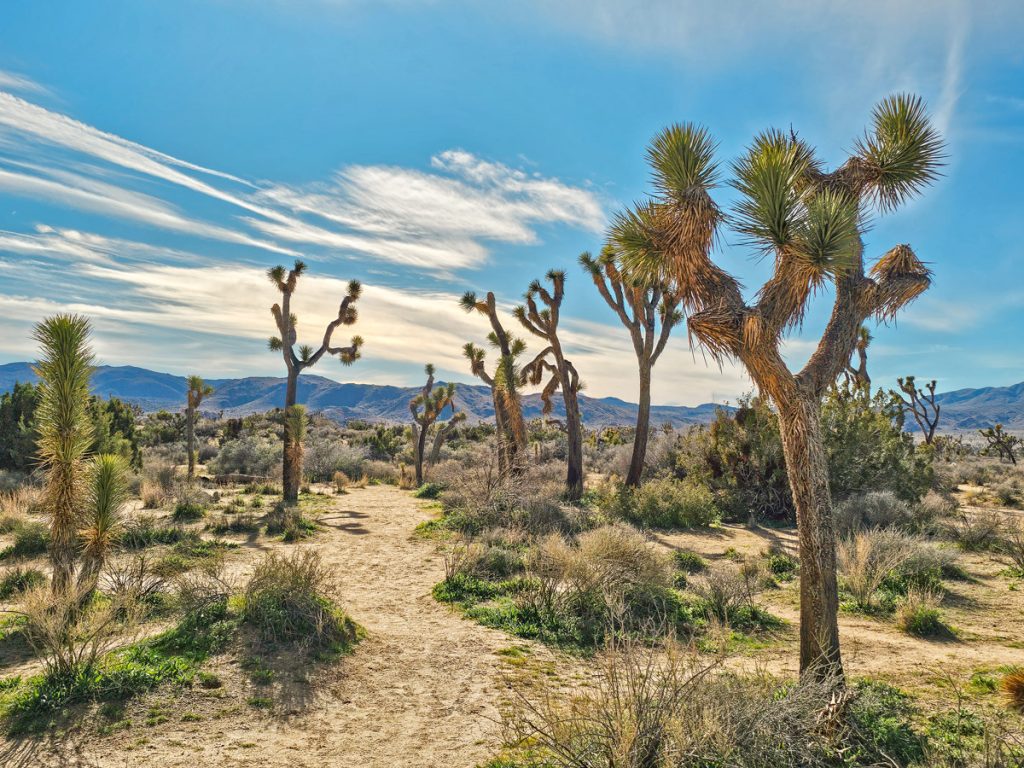
Joshua trees are actually a type of yucca that have adapted well to life in the desert. They aren’t especially large, but they are incredibly distinctive, with twisting branches and spiky leaves. When you get up close, you’ll also notice that the trunks are surprisingly shaggy.
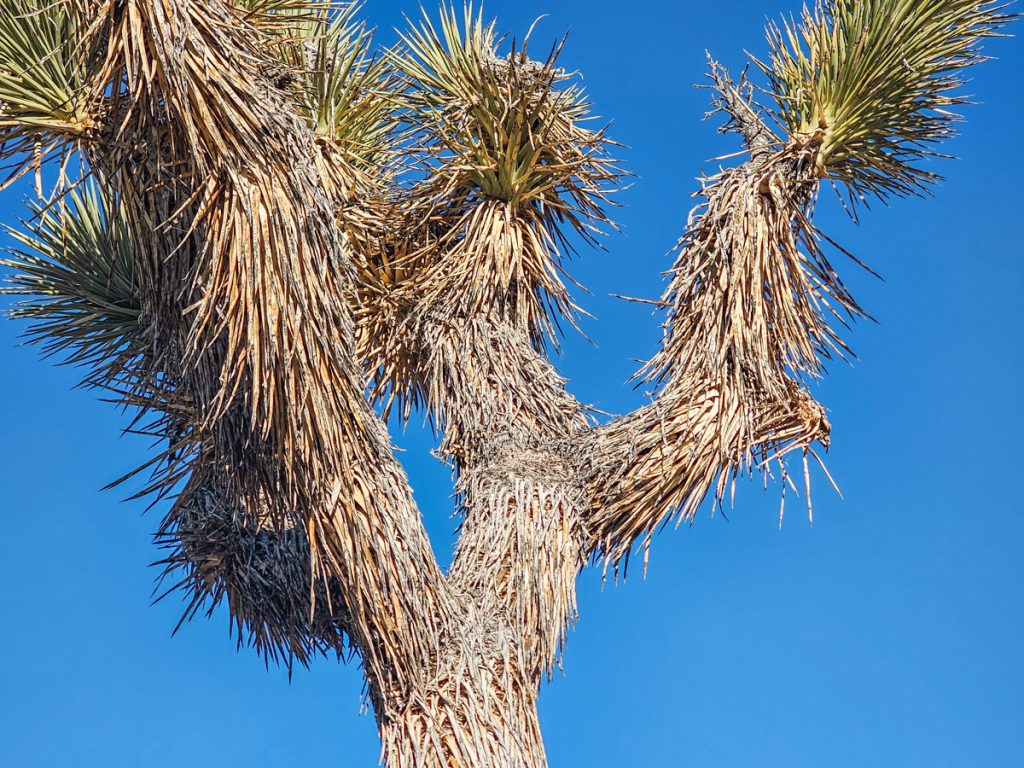
The name “Joshua tree” is commonly attributed to Mormon settlers traveling west in the mid-1800s, who believed the tree’s branches looked like the biblical Joshua raising his arms in guidance. That said, there’s actually not much historical evidence to support that origin story.
Joshua Tree is a really fun park, especially for families or people who don’t want to do a lot of hiking. While there are some longer or more intense hikes, many of the experiences in Joshua Tree center around short and easy (but beautiful!) nature walks and scrambling on boulder piles. There are also several fantastic viewpoints.
Let’s discuss all 3 of these categories: Nature Walks, Views, and Hikes

Nature Trails in Joshua Tree
Joshua Tree’s nature trails are just delightful. They’re usually unpaved but fairly flat, and most range from about 0.5 to 1.5 miles long.
Along many of these trails, you’ll also encounter another of the park’s distinctive features: enormous boulder piles. In many areas you’ll find huge clusters of smooth, rounded granite rocks stacked together, and most of them are completely open for visitors to climb around and explore. It’s basically a giant natural playground and one of the most fun parts of visiting Joshua Tree.
These boulders are made of White Tank granite, an igneous (volcanic) rock that formed when magma pushed up from deep underground and slowly cooled. Over millions of years, erosion wore away the surrounding rock and exposed the massive granite formations we see scattered across the park today.
1. Hidden Valley Nature Trail
If you only do one nature trail in Joshua Tree, make it Hidden Valley. This 1.7 mile loop takes you through one of the most beautiful areas of the park.
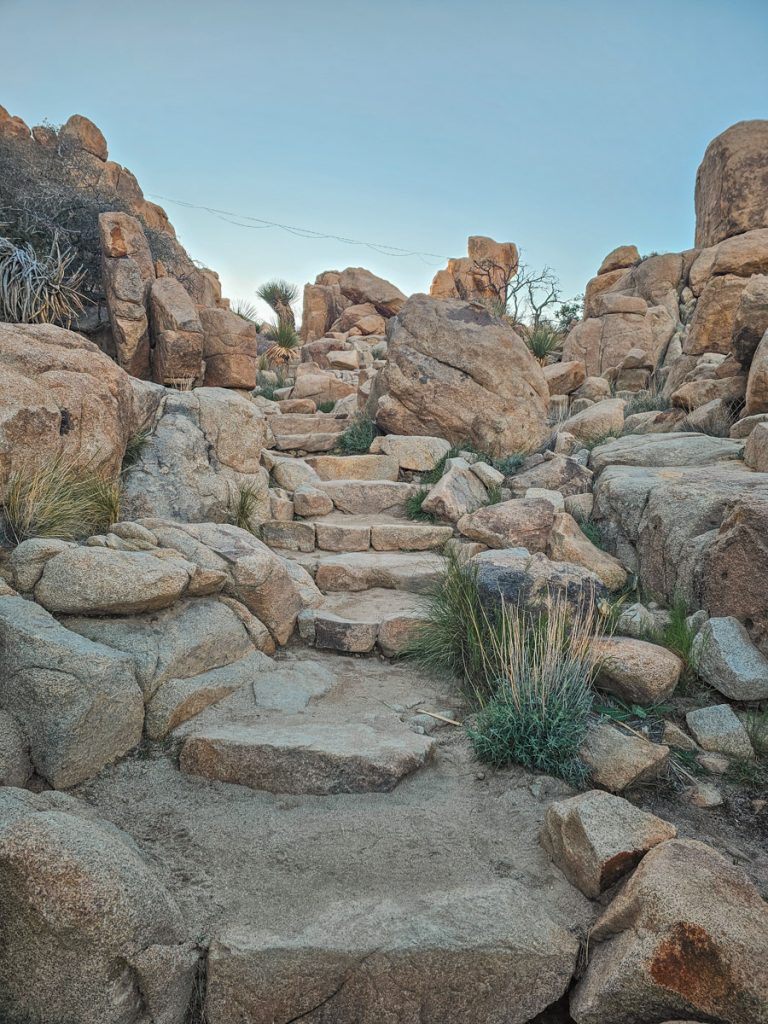
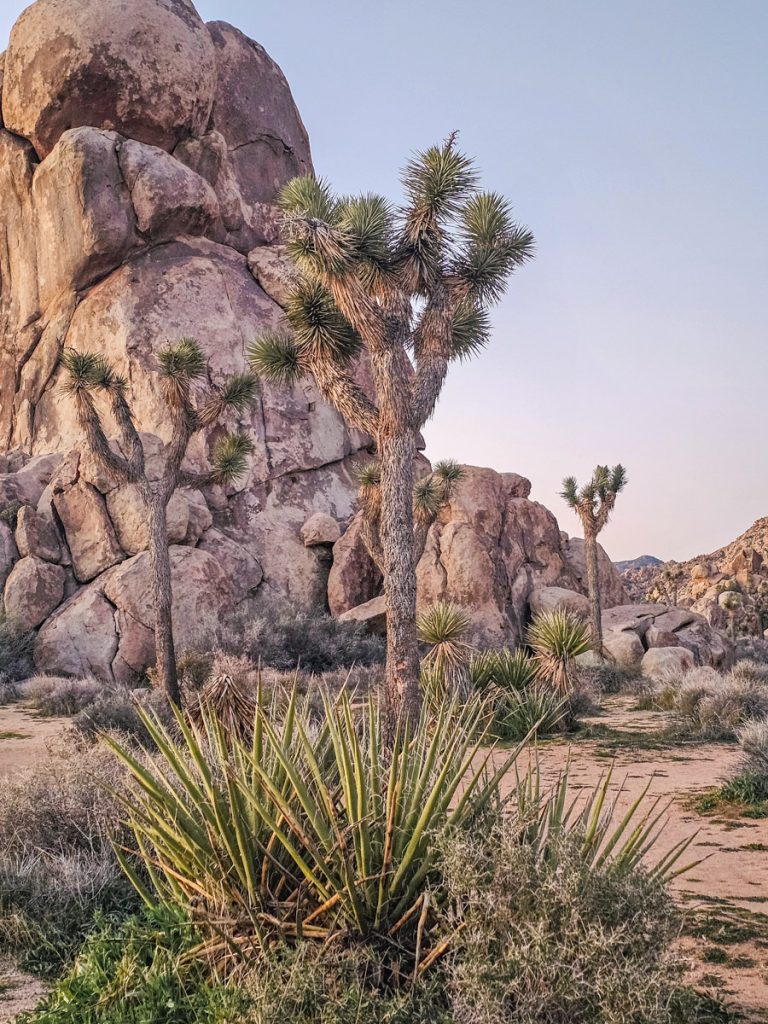
The trail winds through a rocky valley surrounded by towering granite boulders, with Joshua trees scattered throughout the landscape. The terrain constantly changes as you move between clusters of rock formations and sandy washes. There are also some really picturesque rock steps and stone stair sections built right into the trail as you move through the boulder fields.
One of the best parts of this trail is how much there is to explore. There are countless boulders, little rock piles, and hidden corners where you can wander around or scramble up for different views.
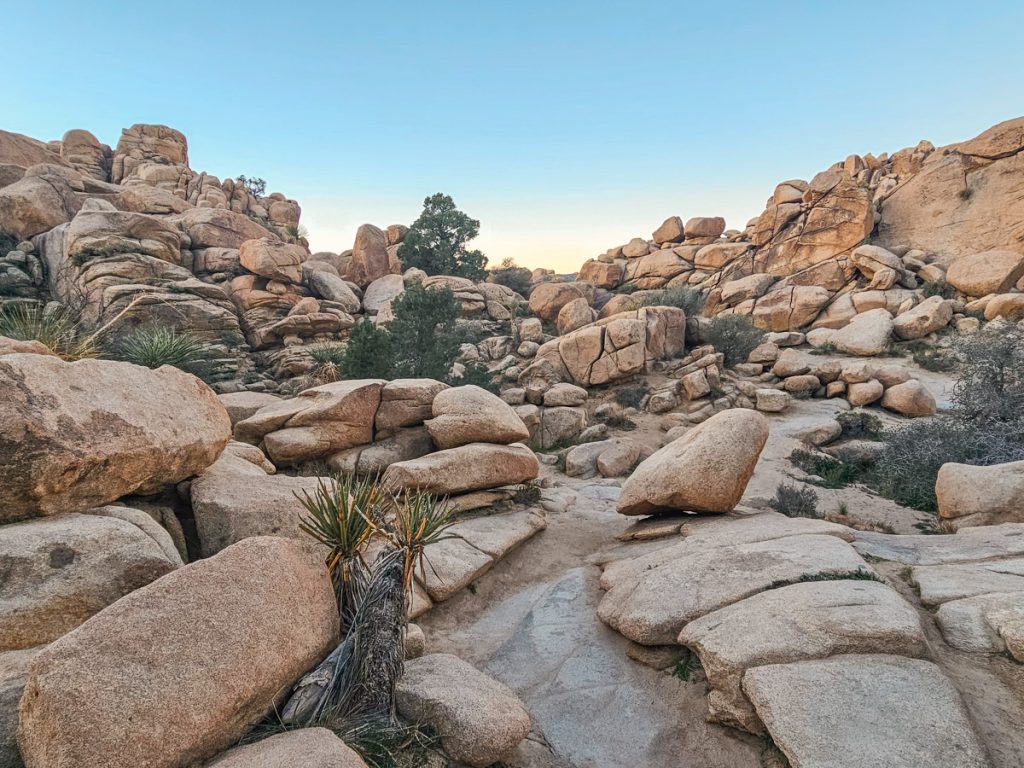
Hidden Valley itself is believed to have been used by cattle rustlers in the late 1800s. The ring of boulders surrounding the valley made it a natural corral where stolen cattle could be hidden. Ranchers later blasted a gap in the rocks so they could move cattle through the valley.
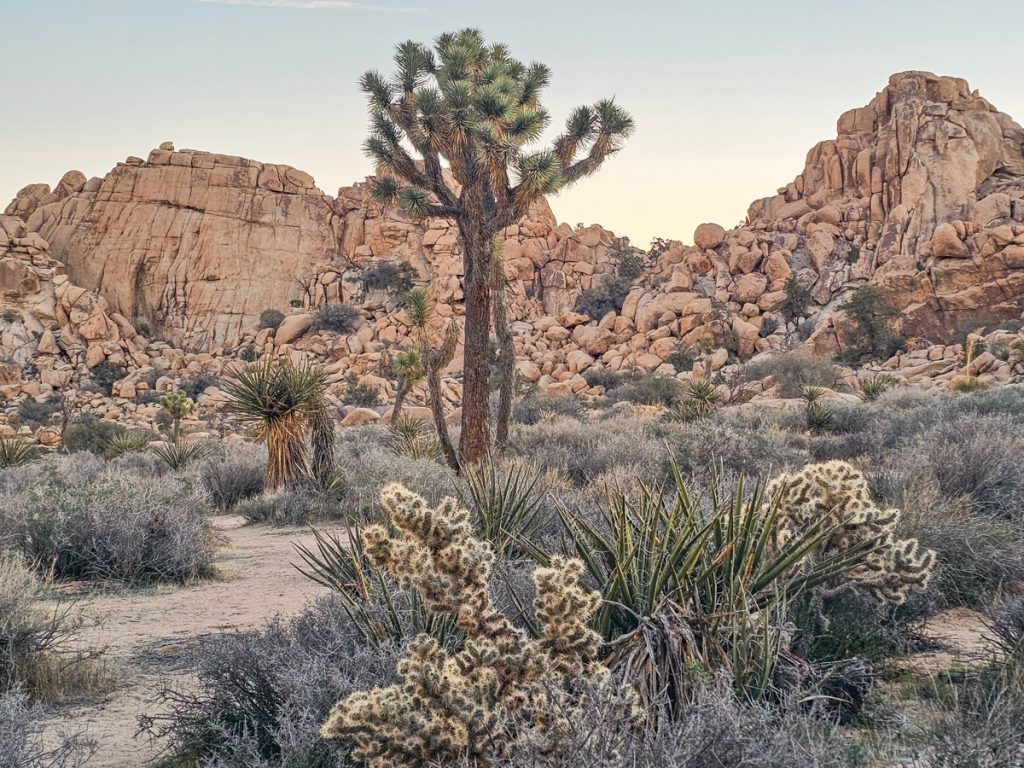
This is one of the more popular trails in the park, and the parking lot can fill up quickly, so if possible, I’d get here early. I was here right around sunrise. The early morning light, plus having practically the whole place to myself, was pretty magical.
2. Barker Dam
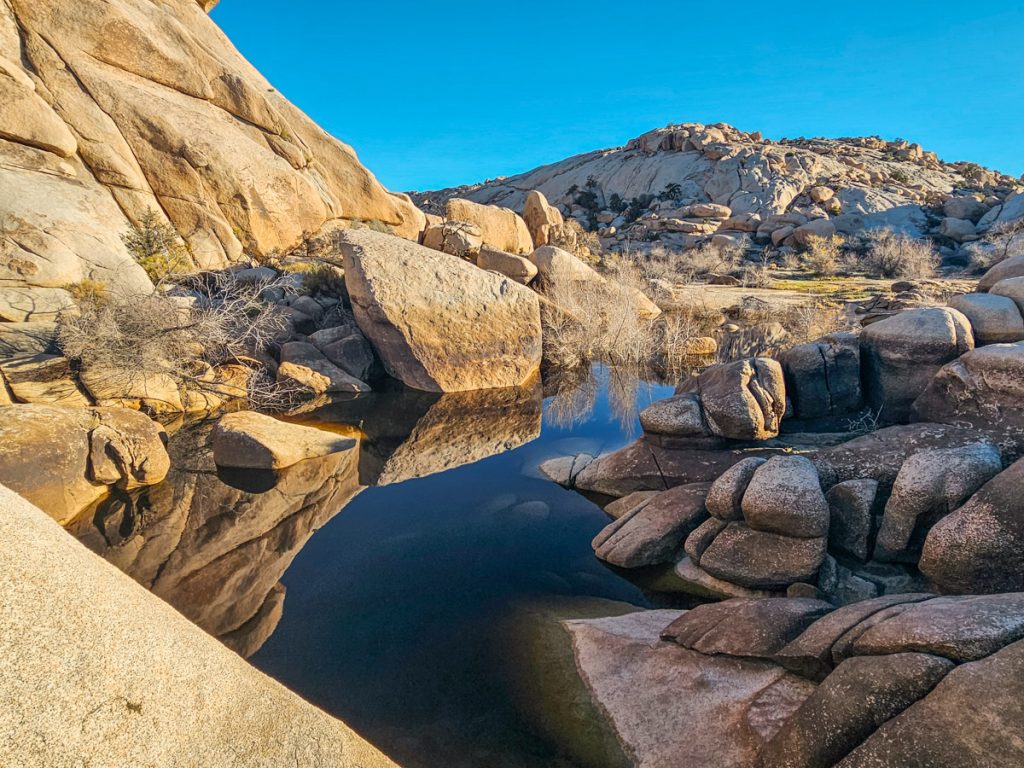
Barker Dam is a short 1.1 mile loop trail that leads to a small, human-made dam tucked among granite boulders. The hike itself is fun and varied. The first part winds through and over big granite rock formations, and the return portion of the loop takes you through a field of Joshua trees.
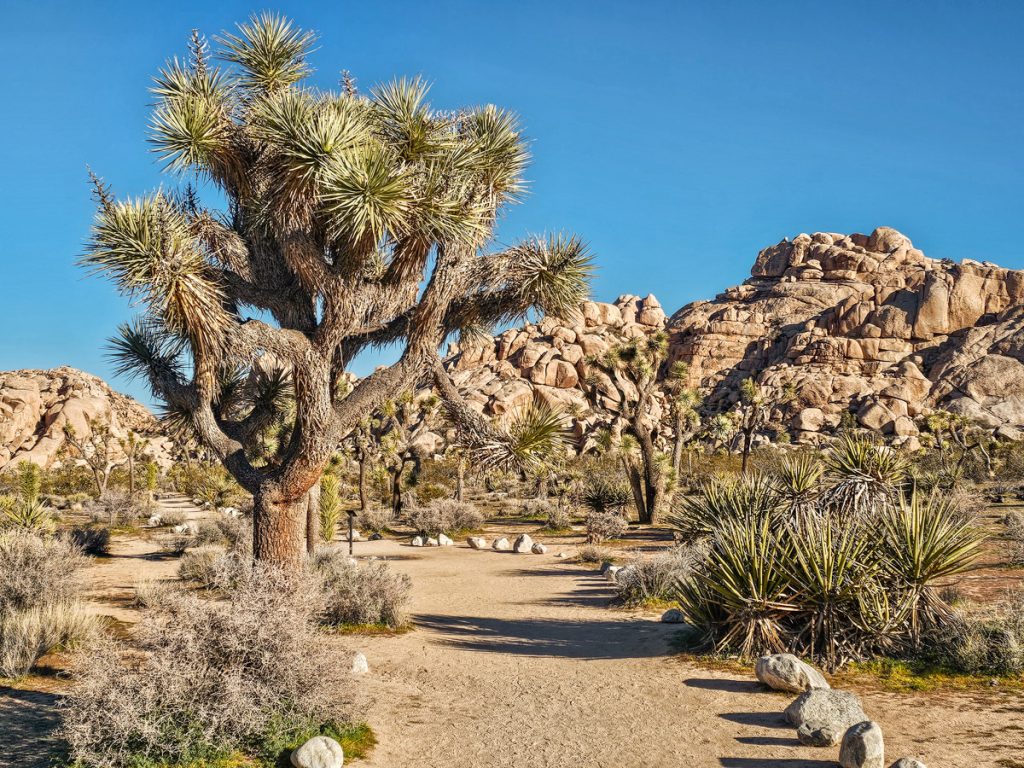
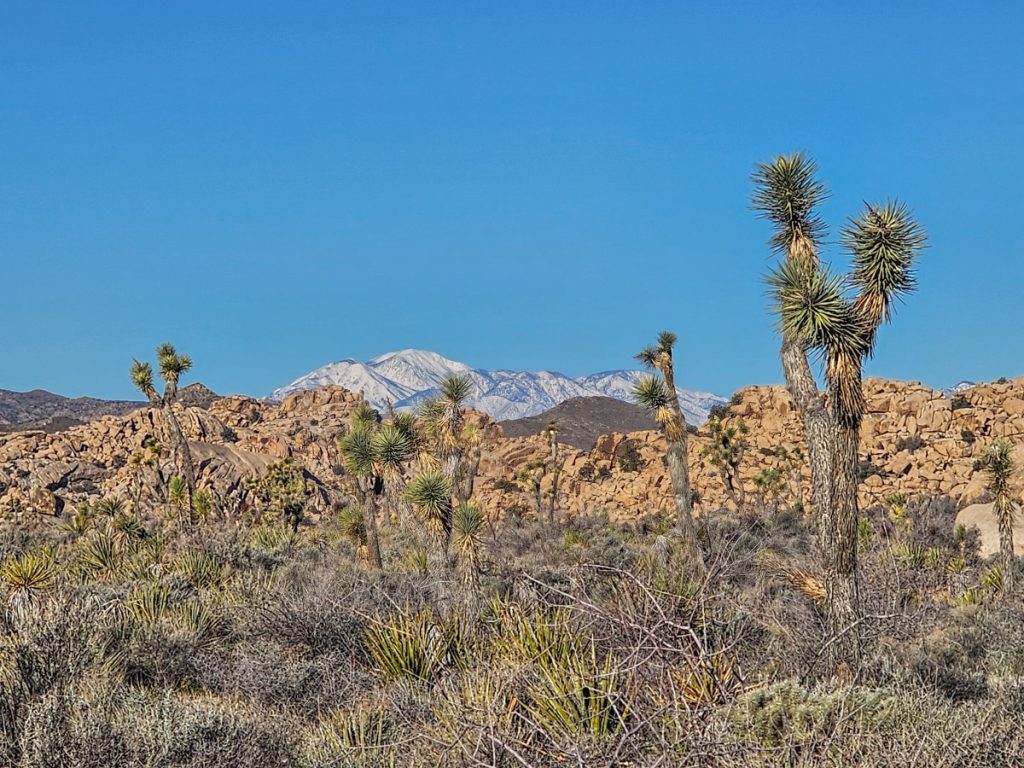
The amount of water in the dam can vary quite a bit depending on recent rainfall. The week before I visited, the park had received some big rains, so the dam was nicely filled. At other times of year it can be much lower, or even completely dry.
One thing to know is that the main trail viewpoint of the dam isn’t actually the most scenic angle. If you want a better perspective of the water, you’ll need to scramble a bit on the rocks just off the official trail. I ended up scrambling down and walking around to the sandy shoreline side, which gave a nice view across the water.
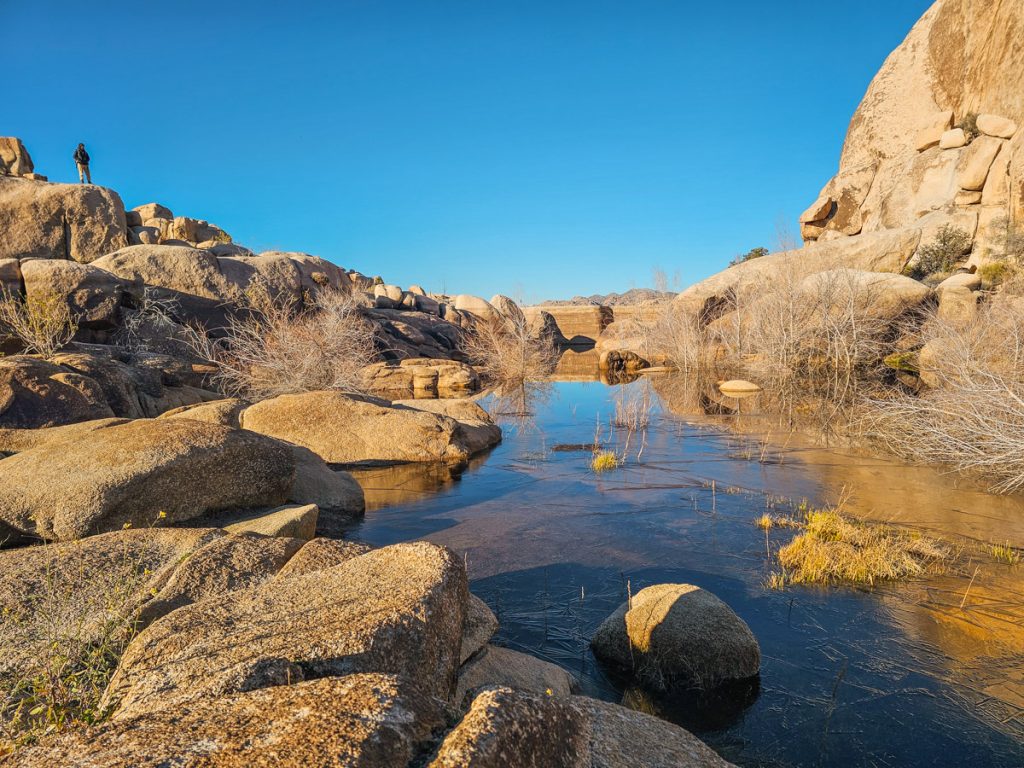
The dam itself dates back to the early 1900s, when cattle ranchers in the area were trying to secure reliable water sources for their livestock. What started as a natural water basin was expanded into a dam by the Barker and Shay Cattle Company, and later enlarged by Bill Keys, the owner of the nearby Desert Queen Ranch.
3. Hall of Horrors
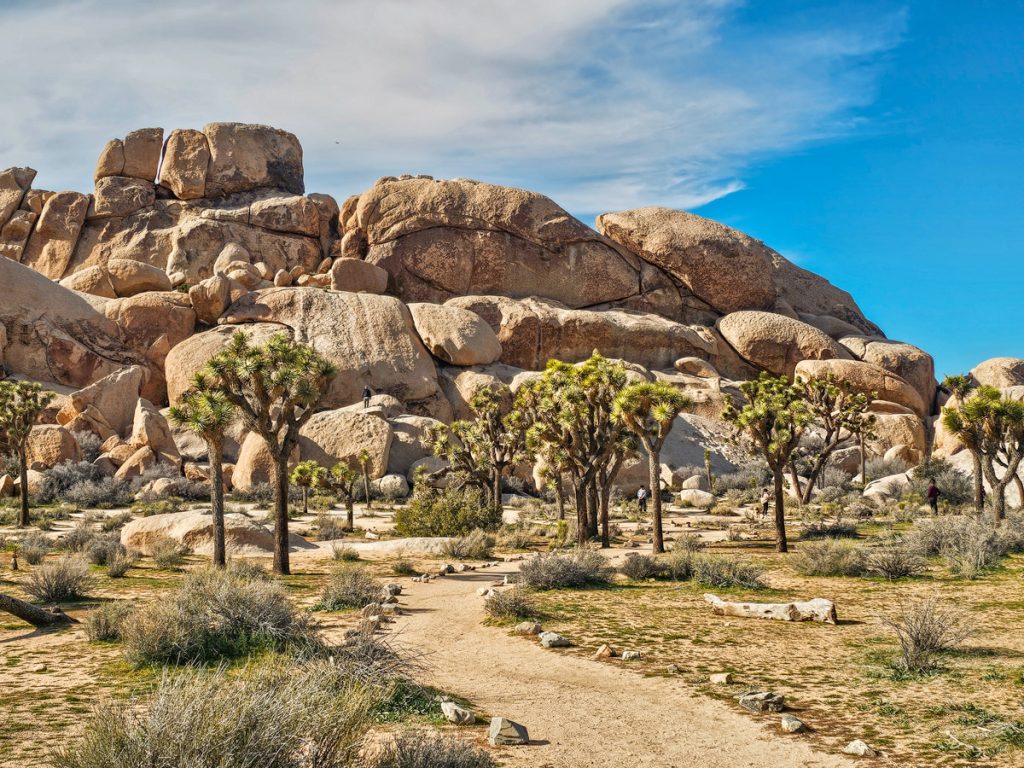
Hall of Horrors is another short, <0.5 mile nature walk that loops around a large pile of granite boulders surrounded by Joshua trees and desert vegetation.
The fun part of this stop is on the far side of the main boulder pile. If you keep walking around the rocks, you’ll find several additional clusters of boulders with some narrow passageways and little corridors between them. One of these forms a tight slot-like scramble where you can climb in between and then up and around the rocks.
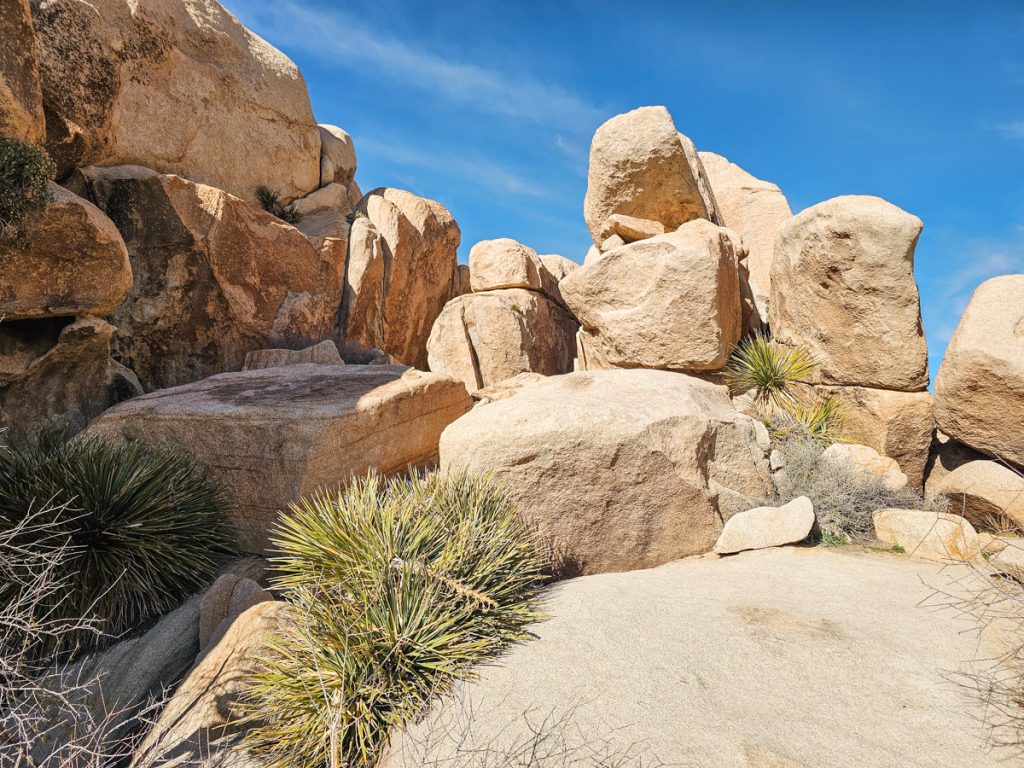
This scramble area isn’t marked on the official trail, but it’s fairly easy to find once you know to look for it. You can use the coordinates here, or just keep an eye out for people climbing around the rocks in that area.
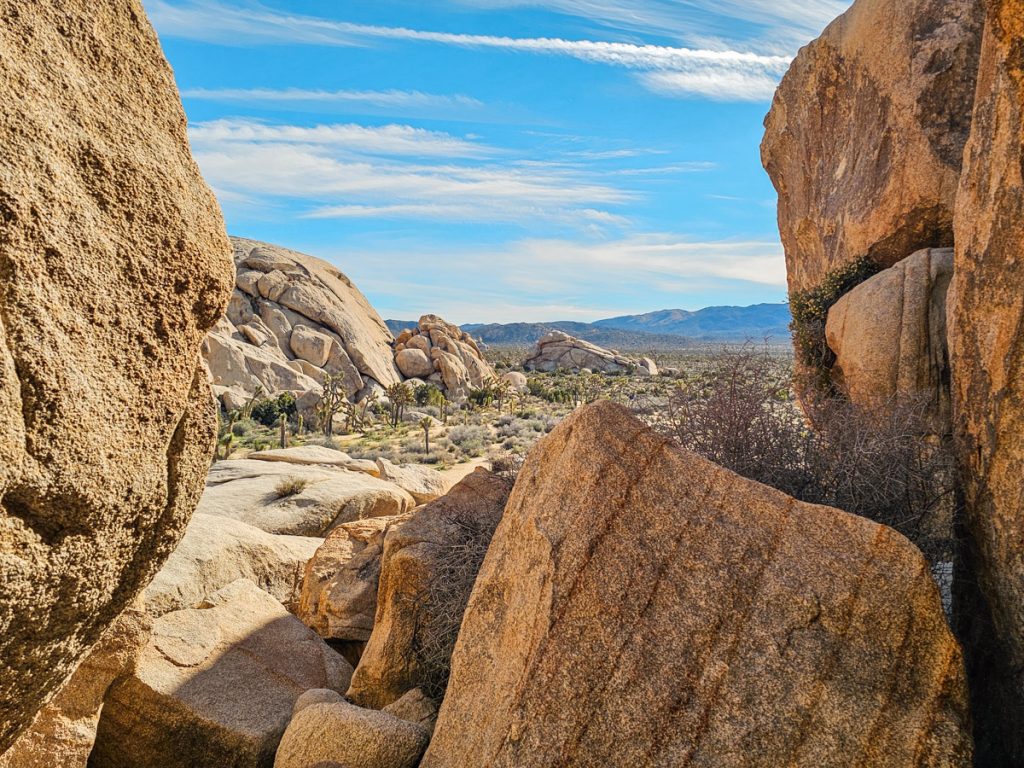
4. Arch Rock and Heart Rock
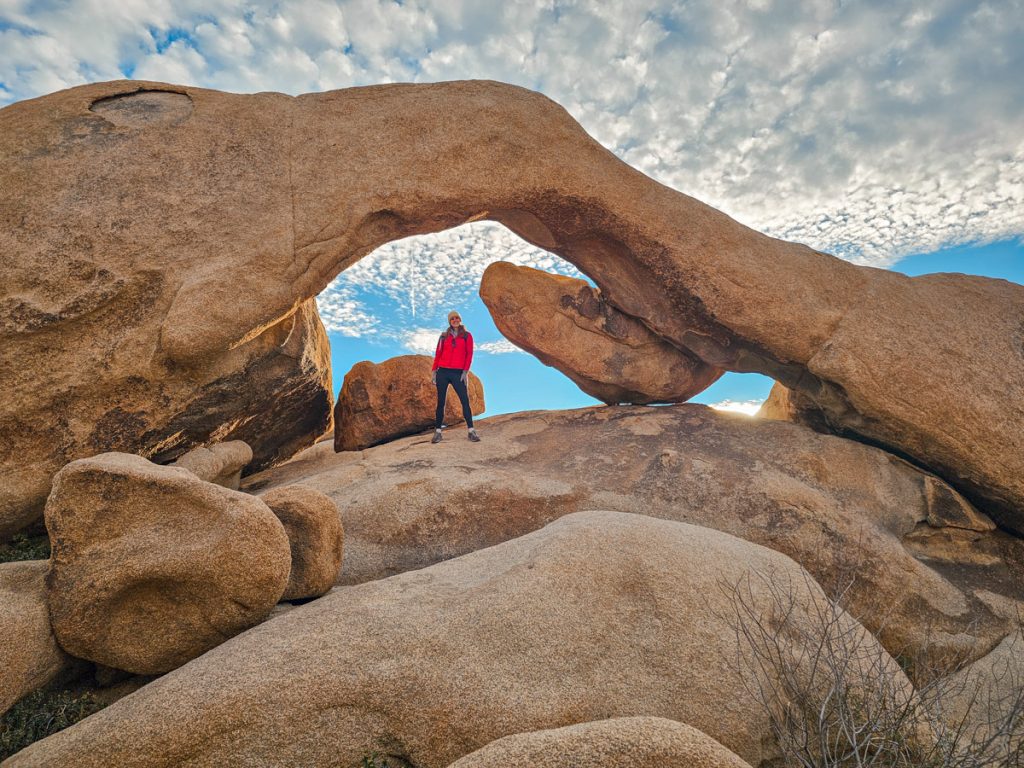
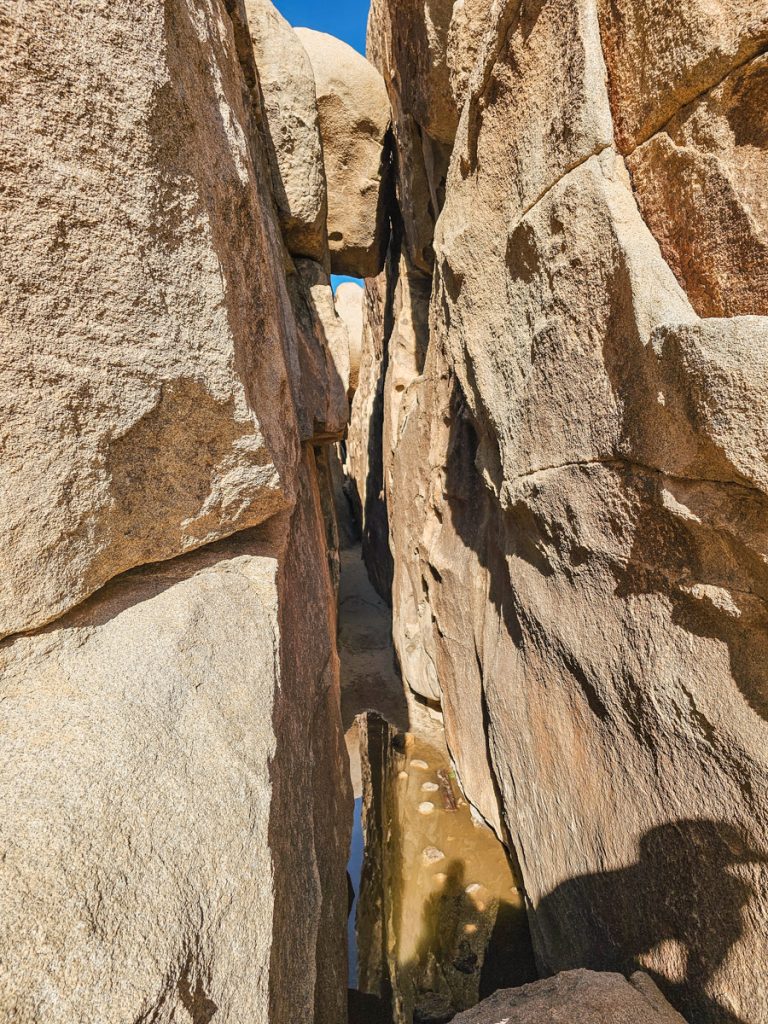
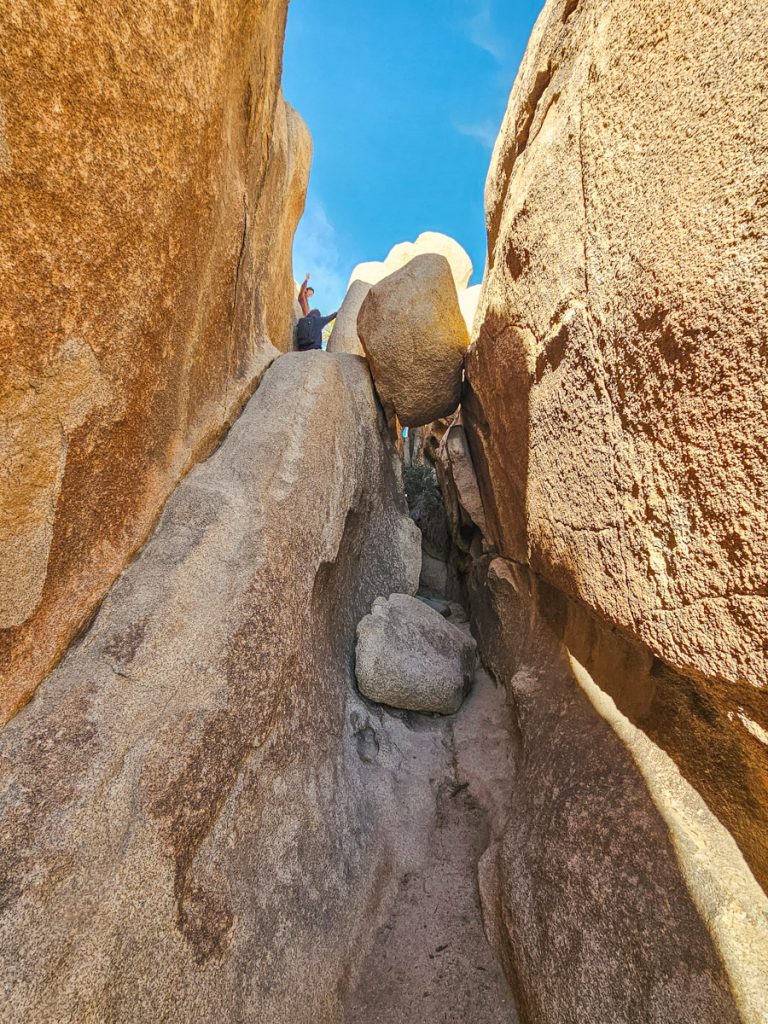
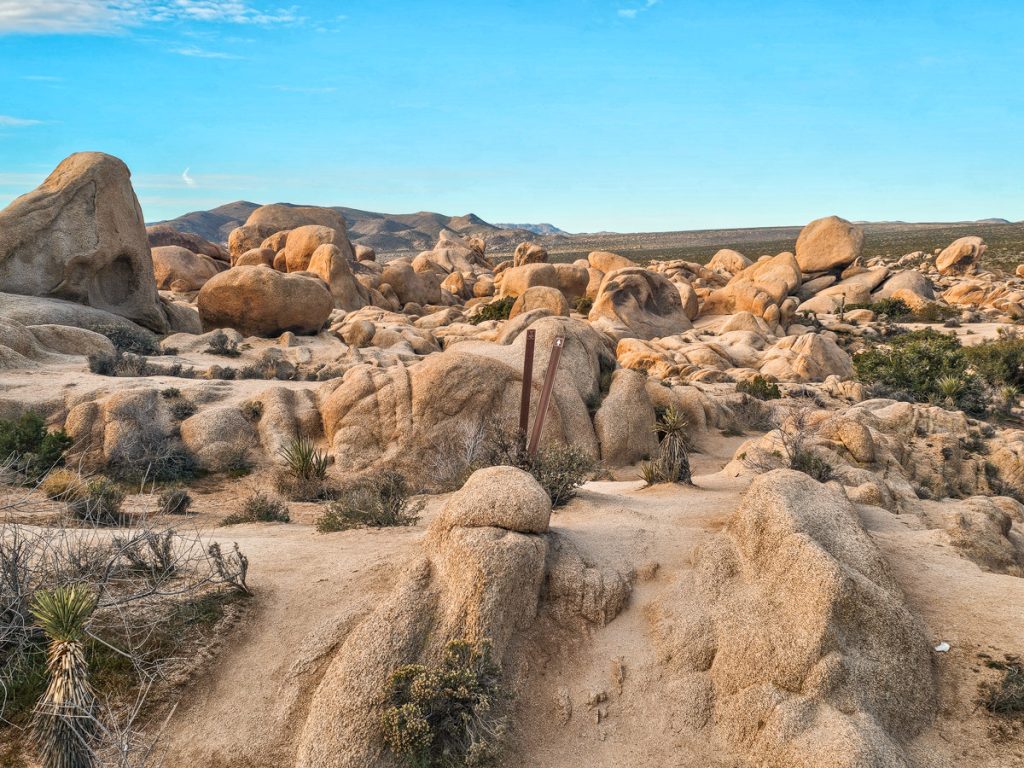
The Arch Rock area is just plain fun. First off, I love arches, they are such a fascinating and unique feature to see. But also, the whole area around the arch is just a playground of rocks to climb around and explore. But also, the area surrounding the arch is basically a playground of rocks to climb around and explore. It’s probably the biggest “scramble and explore” area in the park, at least of the spots I visited.
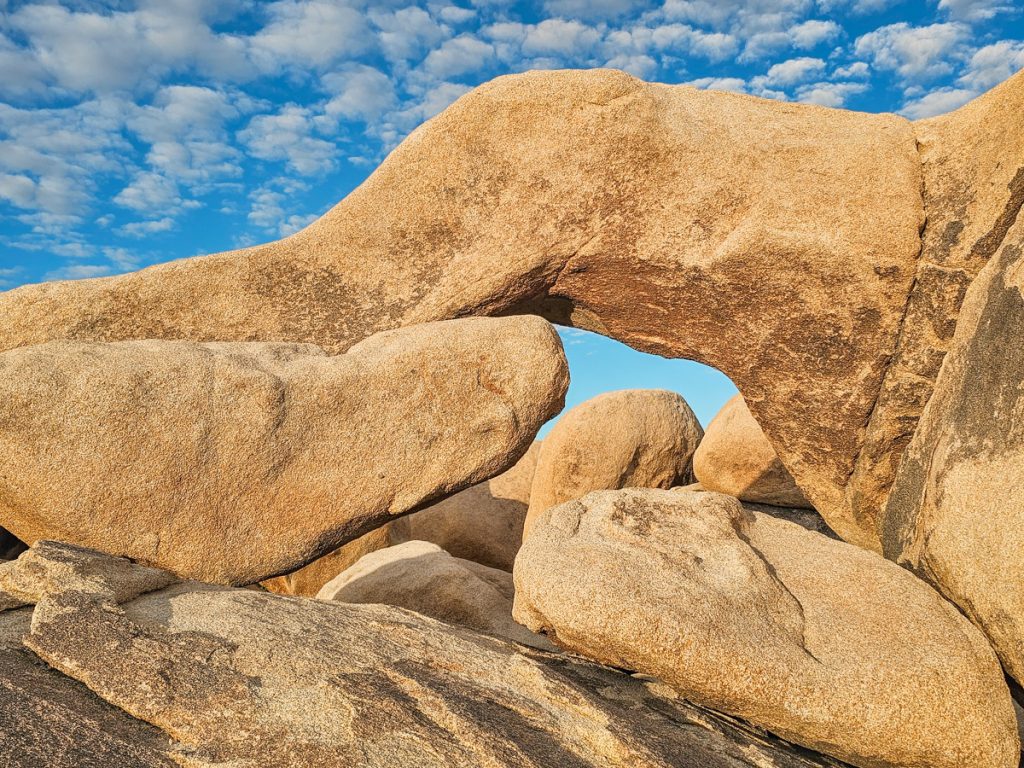
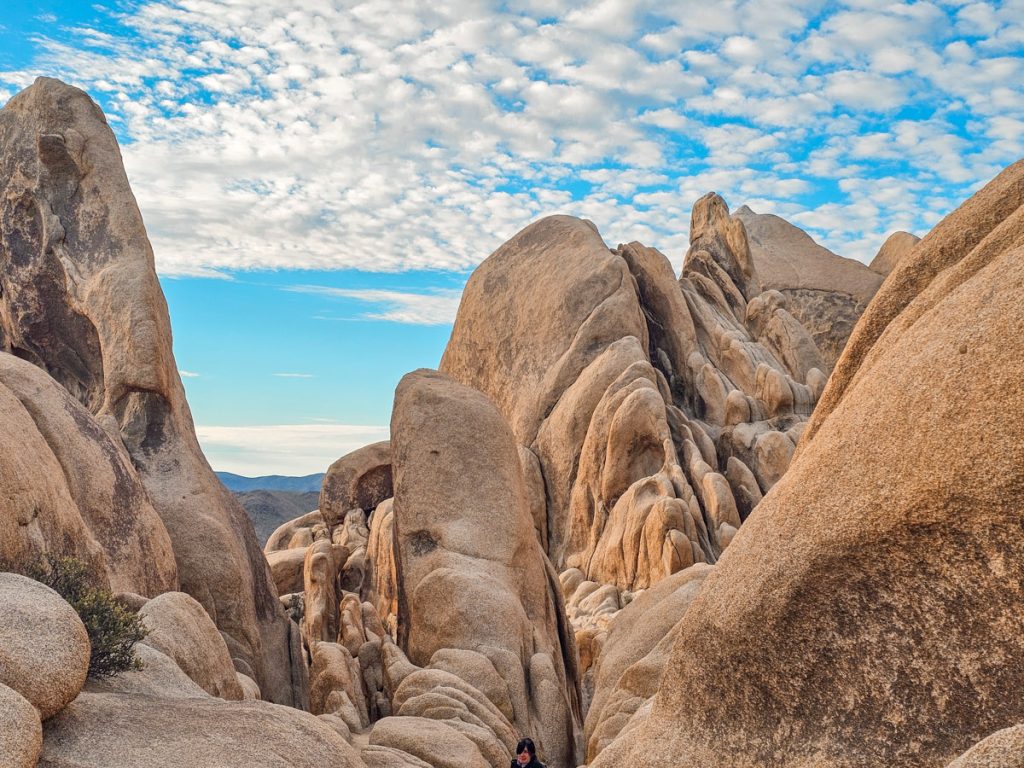
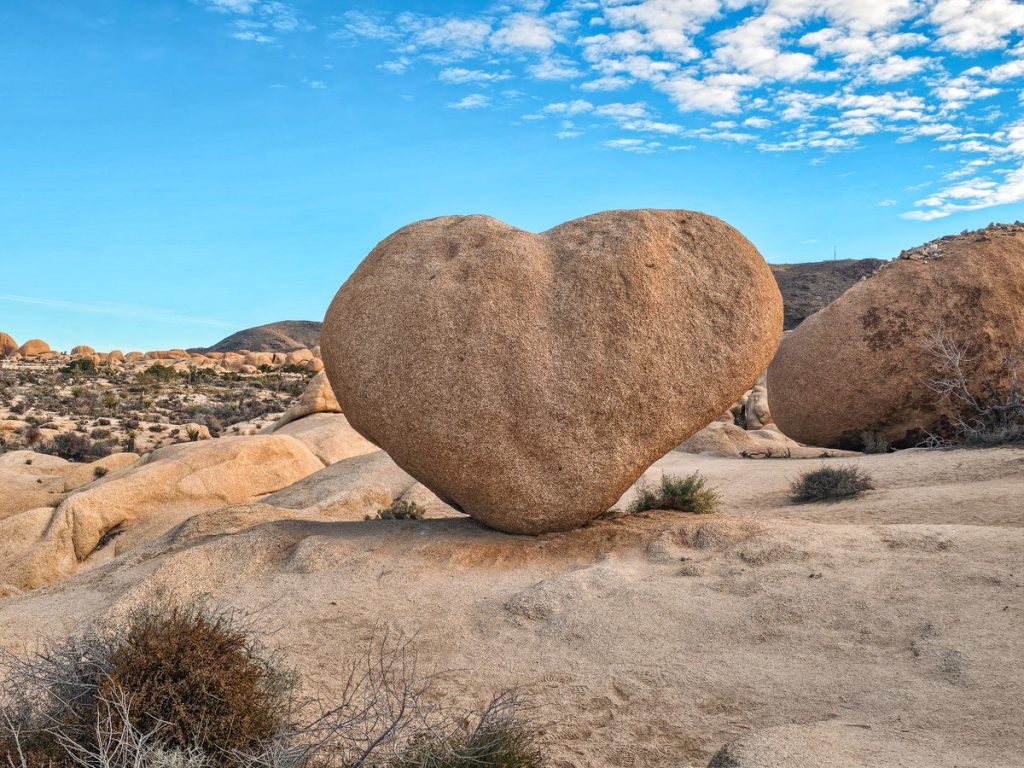
You can climb up and stand underneath Arch Rock for a closer look (just don’t climb on the arch itself). Then a short walk farther along the trail brings you to Heart Rock, which is exactly what it sounds like: a solitary rock naturally shaped like a heart sitting out in the open, right beside the trail.
The full route is about one mile, and it’s a very popular area, so expect to share the trail with quite a few other people.
5. Skull Rock & Skull Rock Nature Trail
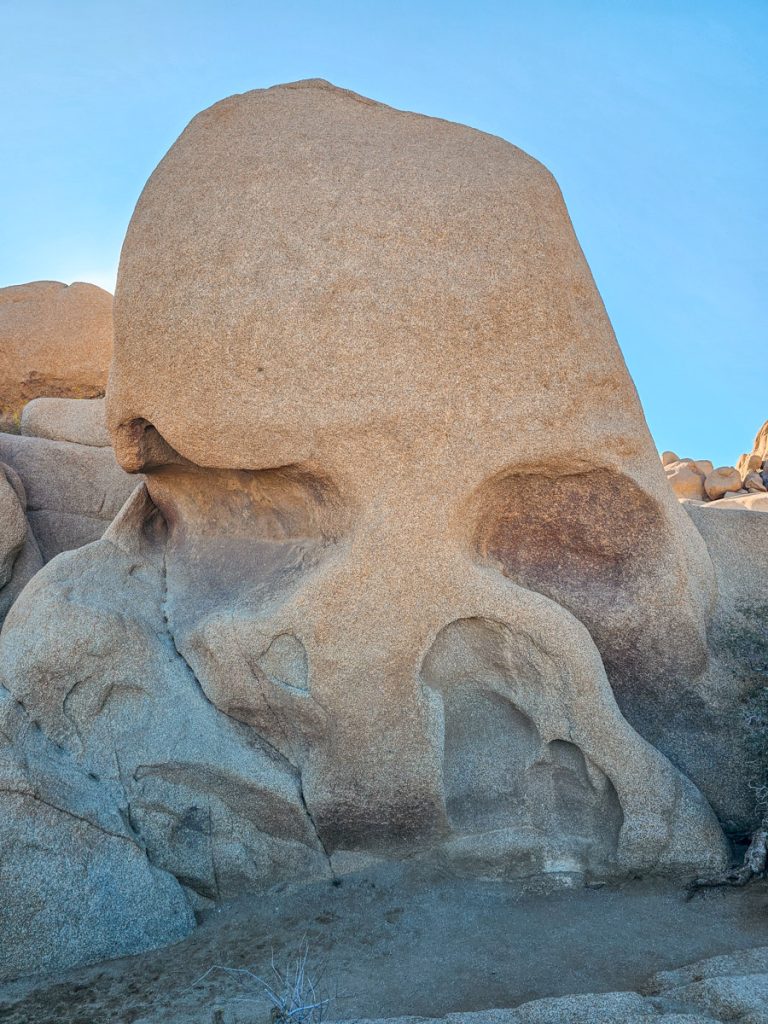
Skull Rock is one of the most popular rock features in Joshua Tree. You can climb around the rocks surrounding Skull Rock and take photos with the skull-shaped formation, just know it’s a small area and can fill up quickly.
The rock sits right off the road, and while there isn’t a dedicated parking lot, there is plenty of shoulder space on both sides of the road where you can pull over.
Right next to the rock is the Skull Rock Nature Trail, a 1.7 mile loop that circles the road and explores the surrounding desert landscape. The first part of the trail is really nice, with lots of rocky formations, Joshua trees, desert plants, and sandy washes.
After about the first quarter of the loop, though, the trail passes through the Jumbo Rocks Campground, and the next quarter follows the paved campground road. This section honestly was pretty lame, as you’re literally walking down the paved campground road for ~0.4 miles.
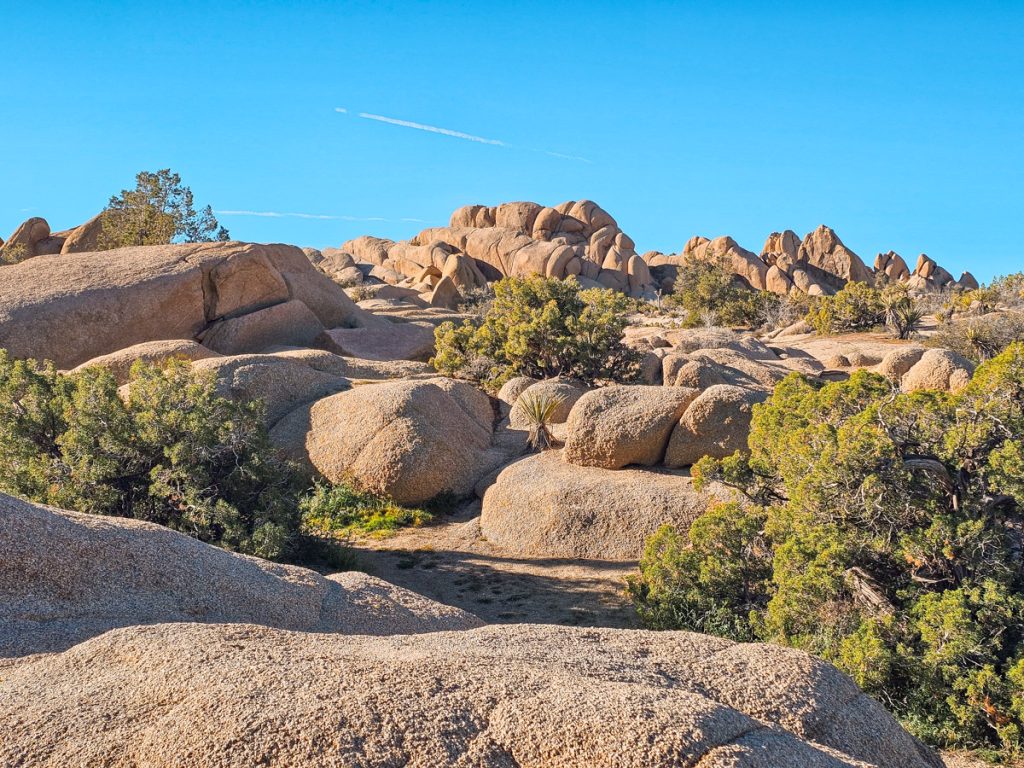
Once you cross the park road again, however, the loop continues through another beautiful section of desert with more rock piles, hills, and Joshua trees. I thought this second half was the best part of the hike.
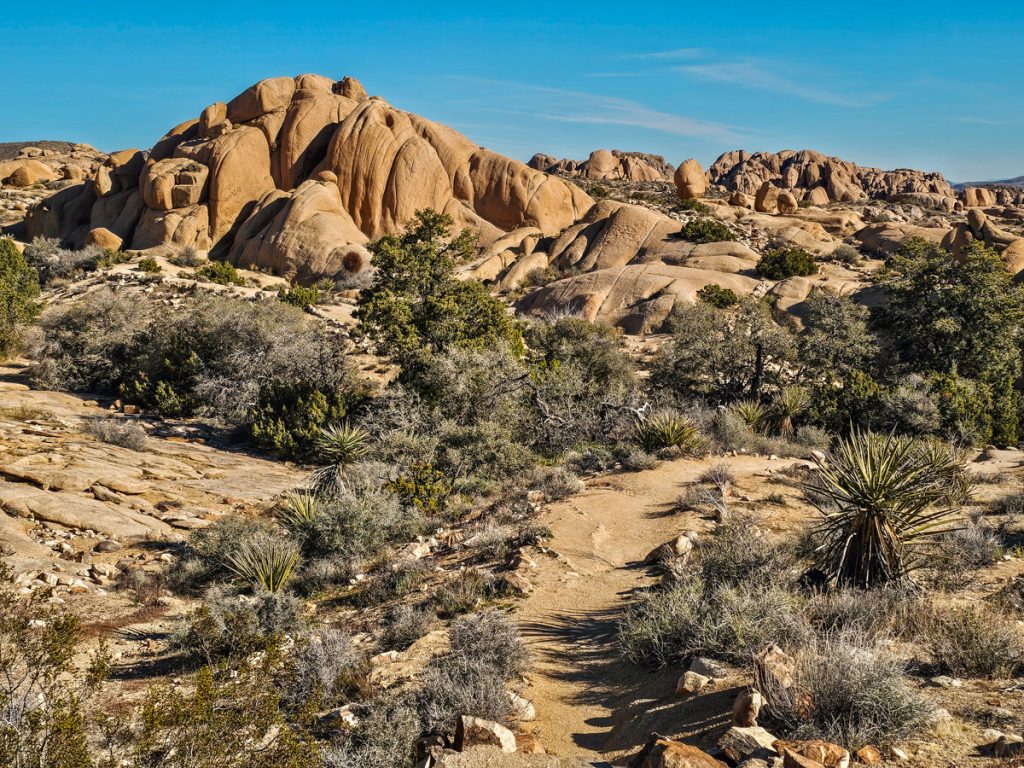
6. Discovery Trail & Face Rock
Just before the Skull Rock Nature Trail returns to the starting point, it intersects with the 0.7 mile Discovery Trail. You can add this trail onto the Skull Rock loop, or simply start near Skull Rock and walk it on its own.
The Discovery Trail is a short interpretive trail with signs explaining some of the rock formations and geology in the area. Parts of the trail feel similar to Skull Rock, with sandy paths weaving between boulders and Joshua trees, but it also includes a few fun features.
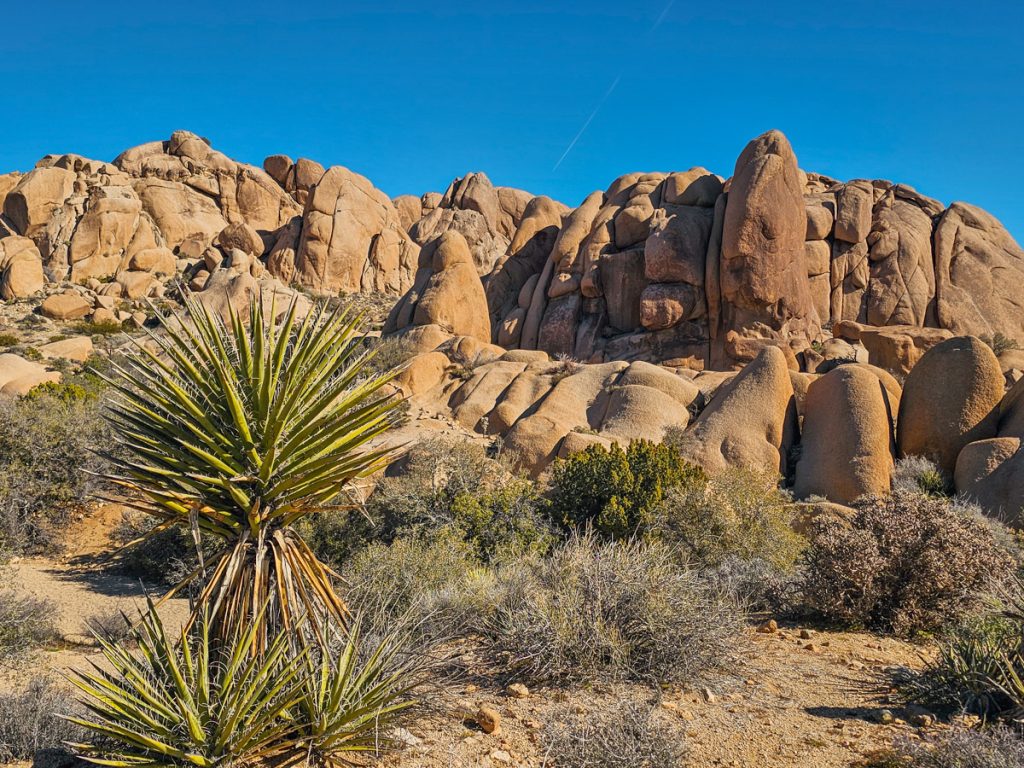
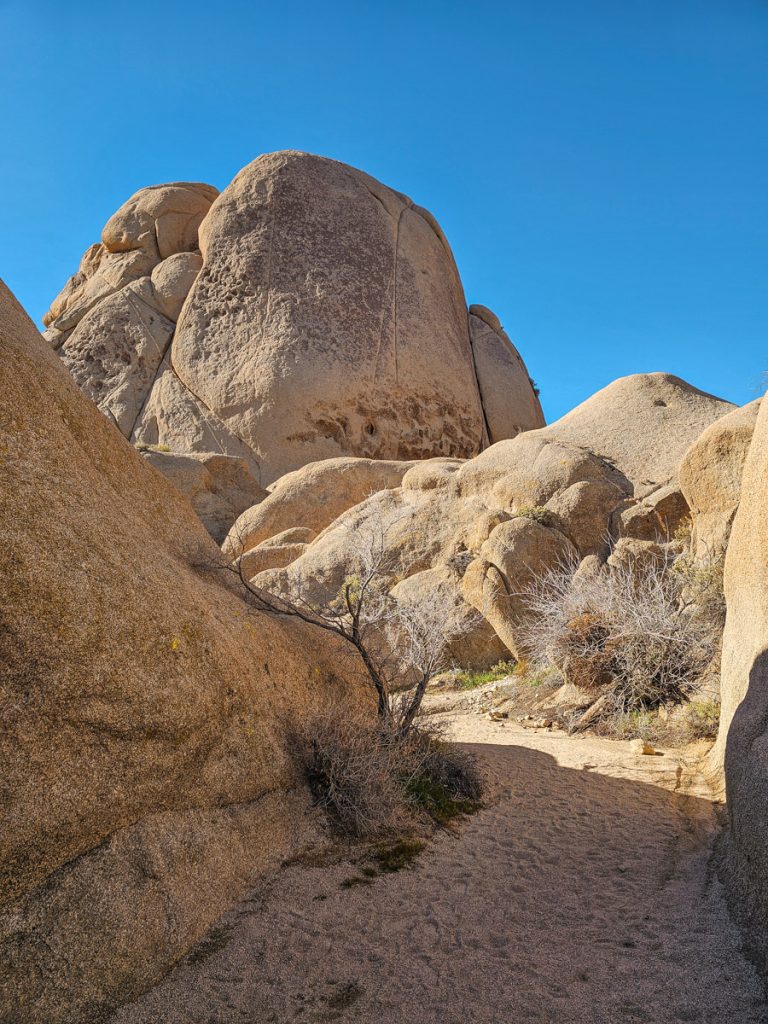
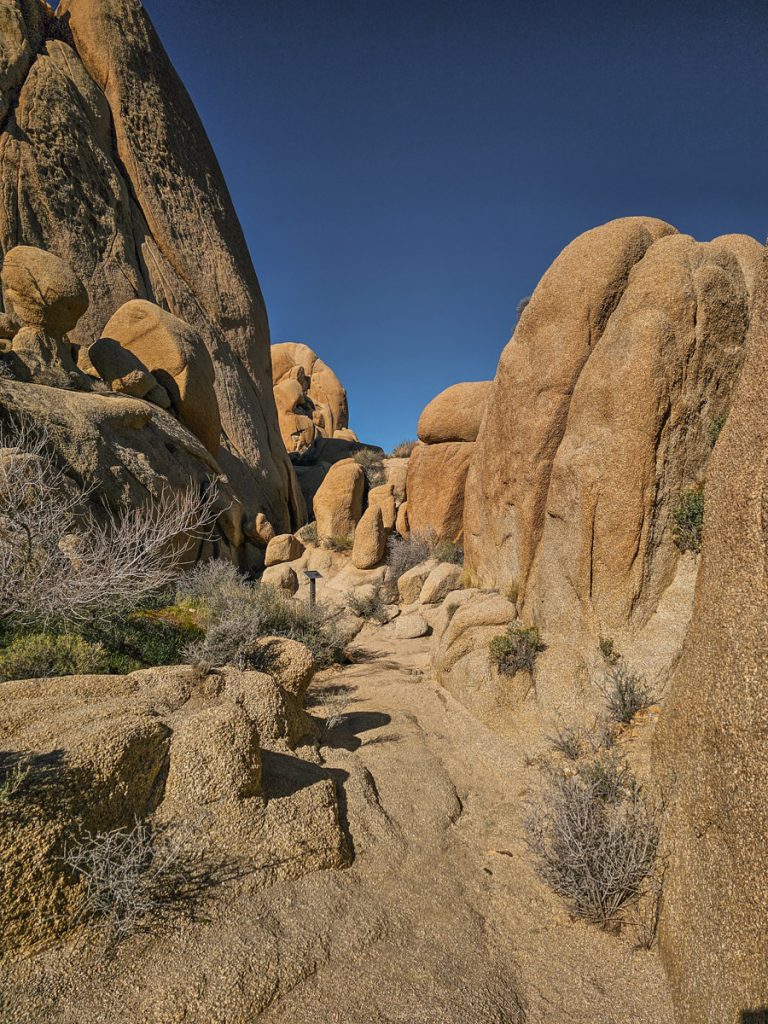
At one point the trail goes through a very short, narrow passage between the rocks that feels a bit like a tiny slot canyon. A short side trail also leads to Face Rock, which really does look like a human face in profile.
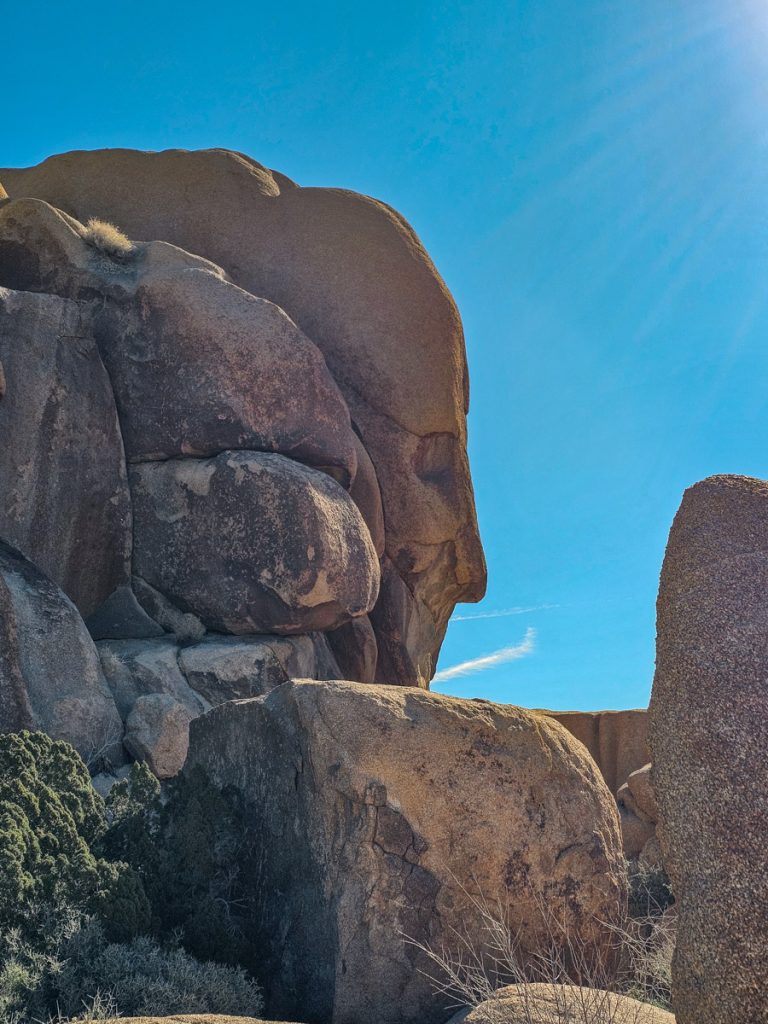
The far side of the Discovery Trail also connects to the Split Rock Loop Trail, so you can easily combine several of these trails into one longer walk if you want to explore more of the area.
7. Split Rock Loop Trail
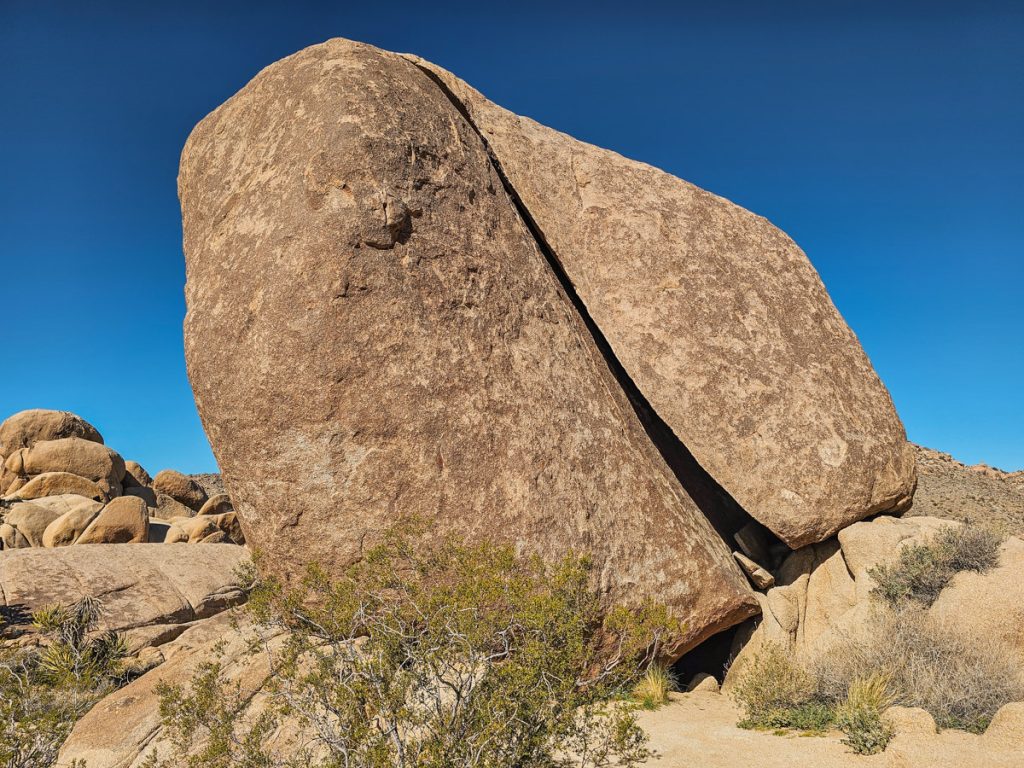
Split Rock itself is right next to the Split Rock parking area, where a large boulder has a dramatic crack running straight through it. From here, the Split Rock Loop Trail heads out on a 2.5 mile nature loop through more classic Joshua Tree scenery.
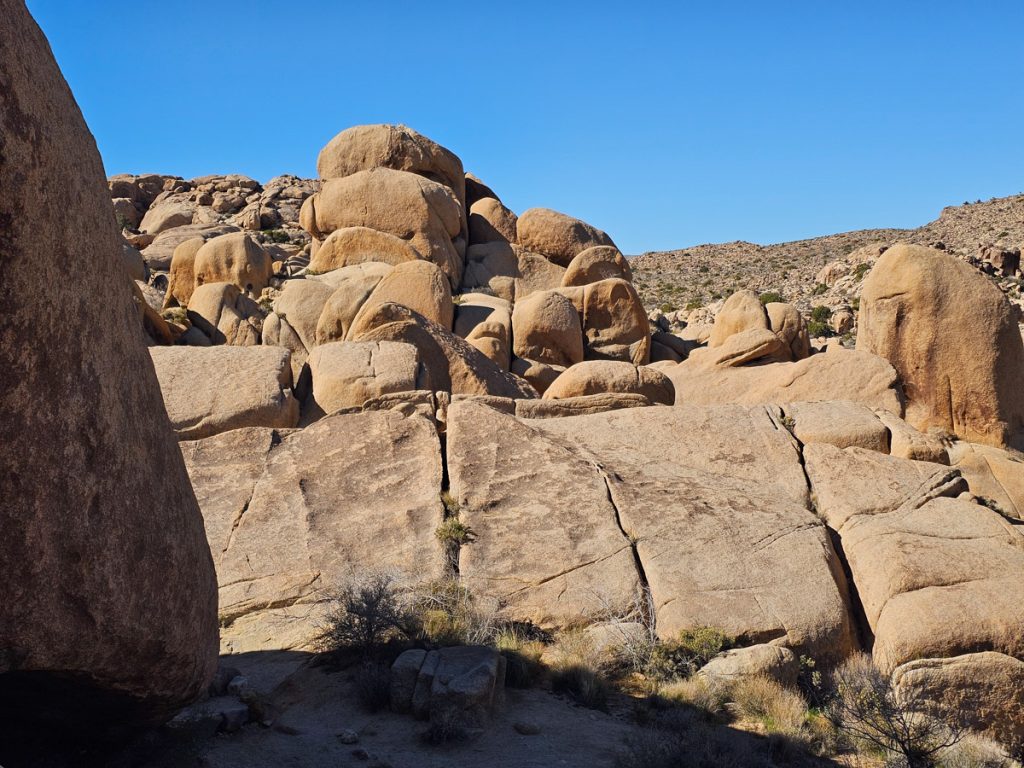
The trail passes through sandy washes, clusters of Joshua trees, desert plants, and scattered rock piles, with a few small hills along the way. I walked up to Split Rock itself but didn’t end up doing the full loop since I was running short on time. From what I saw, though, it looked like a really nice option if you want a slightly longer walk that is still mostly flat.
8. Cap Rock Nature Loop
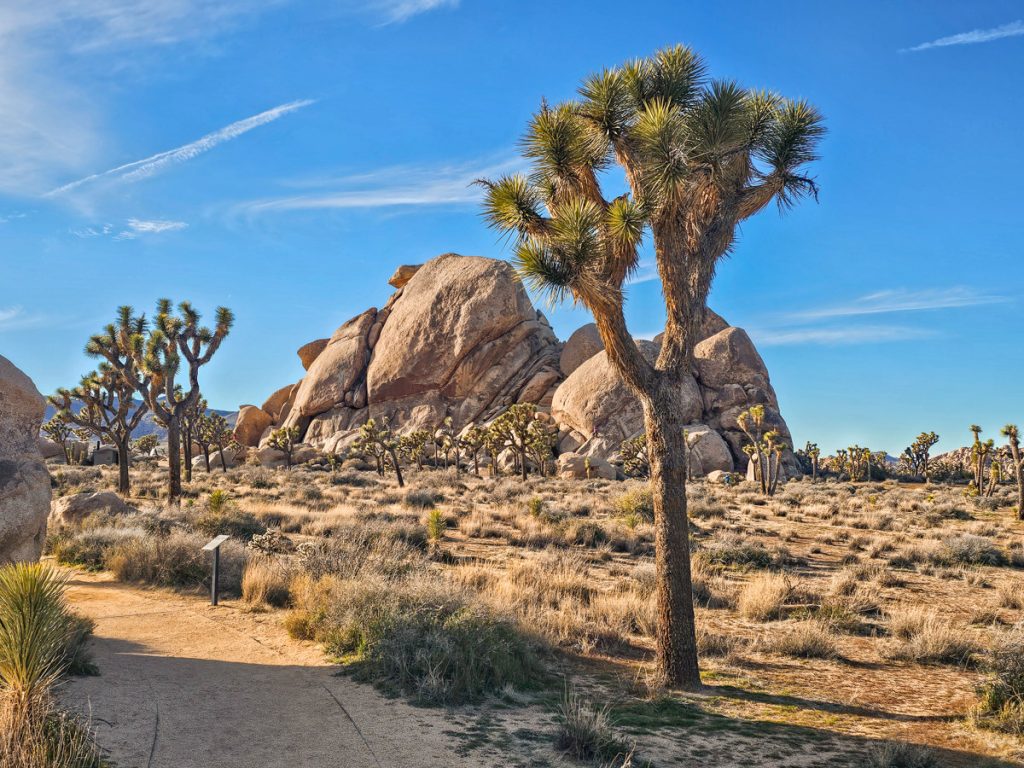
This is another very short, 0.3 mile loop that winds among the rocks and Joshua trees. It’s an easy walk on a sandy trail through a small cluster of boulders and desert plants.
Personally, I felt like this was one of the less interesting walks in Joshua Tree, so I would consider this a lower priority if you’re short on time.
Great Viewpoints in Joshua Tree
There aren’t a ton of panoramic viewpoints in Joshua Tree beyond what you can see from the Nature Trails. However, the two on this list are fabulous and shouldn’t be missed.
9. Keys View
Keys View is a viewpoint high up in the mountains with wide, sweeping views over the Coachella Valley, with Palm Springs in the distance, the Salton Sea, and the mountains stretching along the western-facing horizon. You can drive right up to the viewpoint, which makes it a very popular stop, especially at sunset.
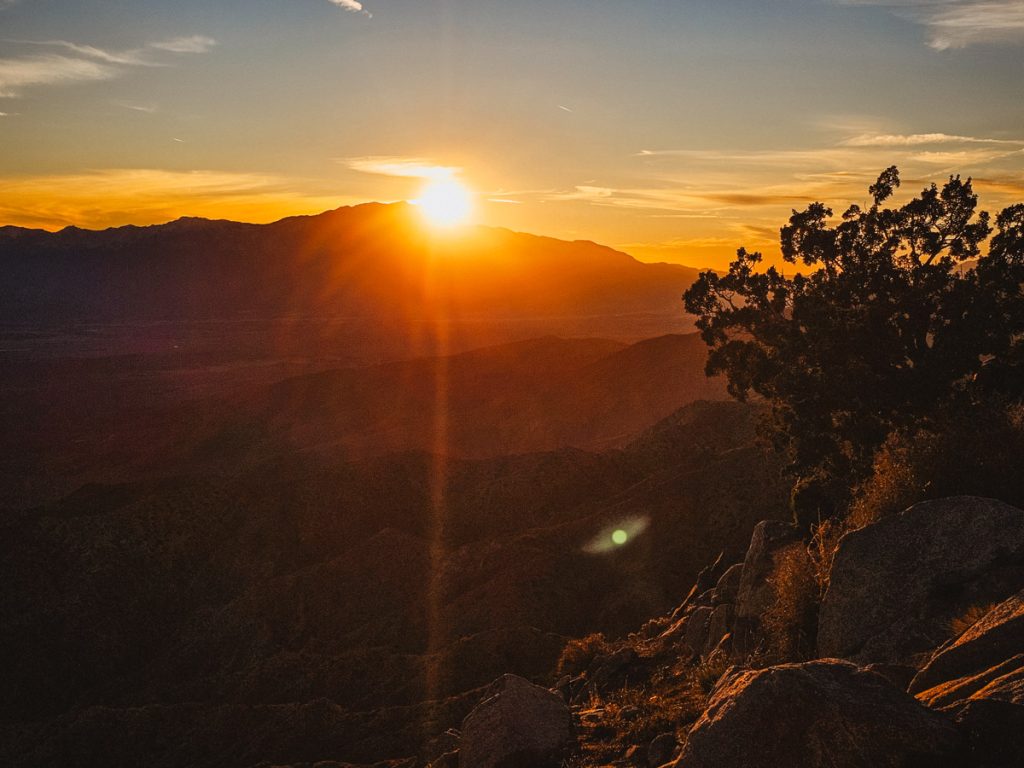
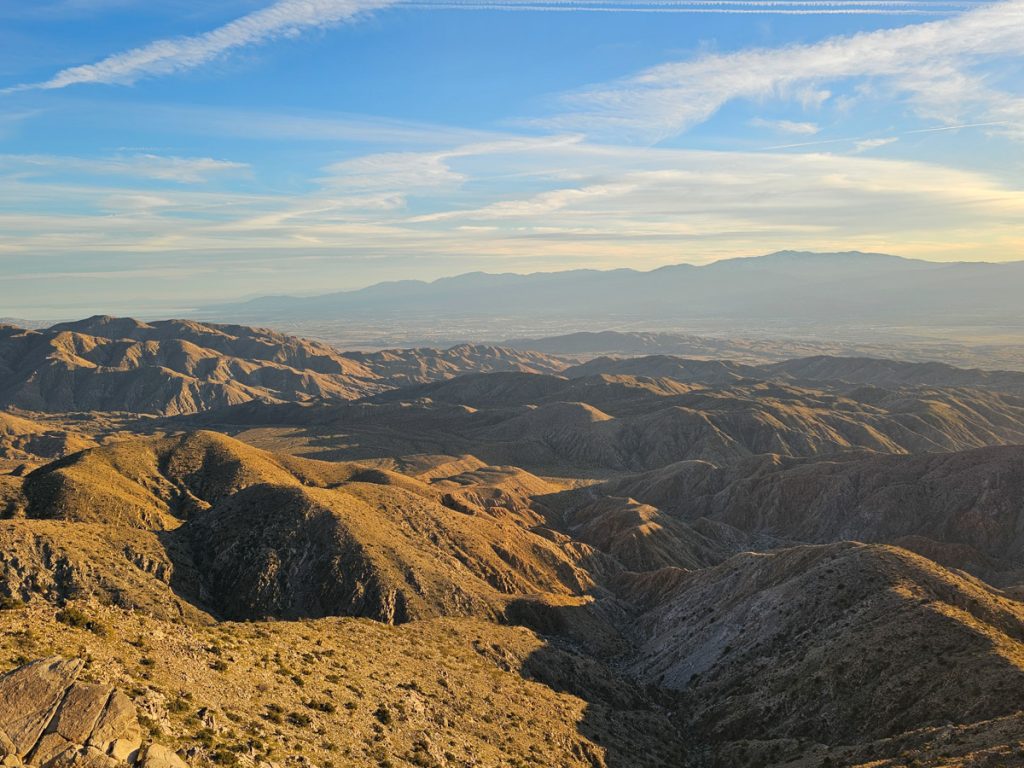
There are lots of rocks around the viewpoint where people spread out to sit and watch the sun go down. Make sure you stay for about 15–20 minutes after the official sunset, since that’s often when some of the most beautiful colors appear in the sky.
Parking here can be a little tricky. This is always a popular spot, but for most of the day people stop briefly for the view and then move on, so turnover is fairly high and it usually isn’t too difficult to find a space.
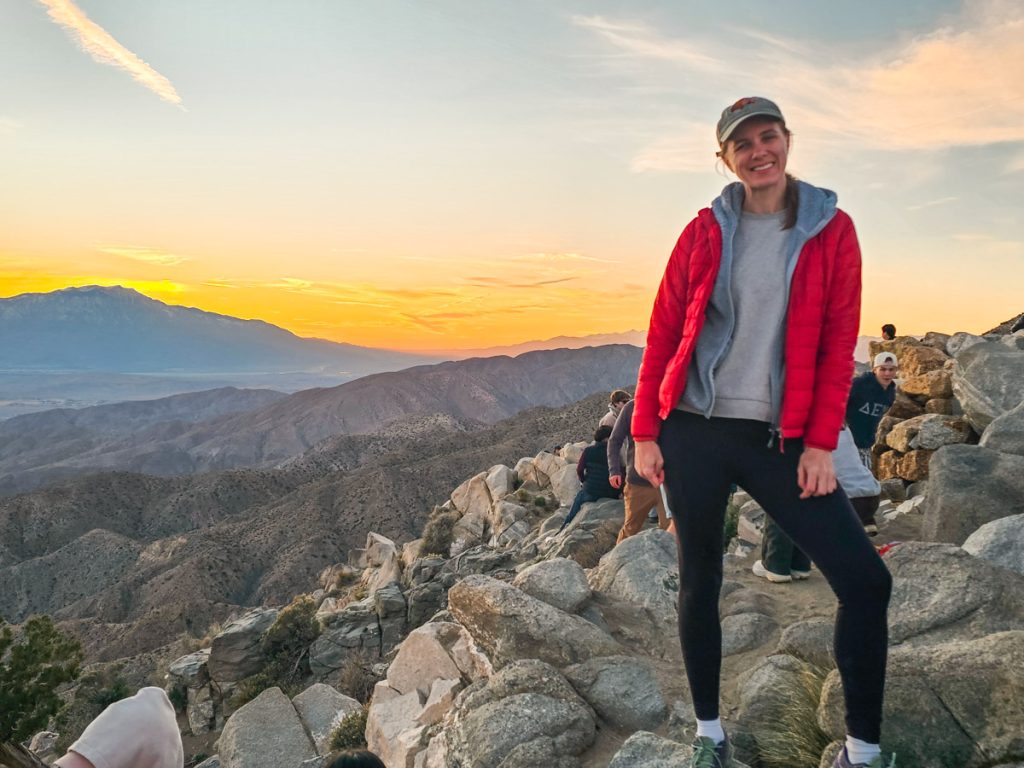
About 20 minutes before sunset, though, things change. Many people who arrive around that time stay until the sun sets, and the medium-sized parking lot fills up quickly, and a big line of cars forms to get into the lot. I’d recommend arriving about 30 minutes before sunset to secure a spot and then just relaxing and enjoying the views until the main event.
10. Cholla Cactus Garden
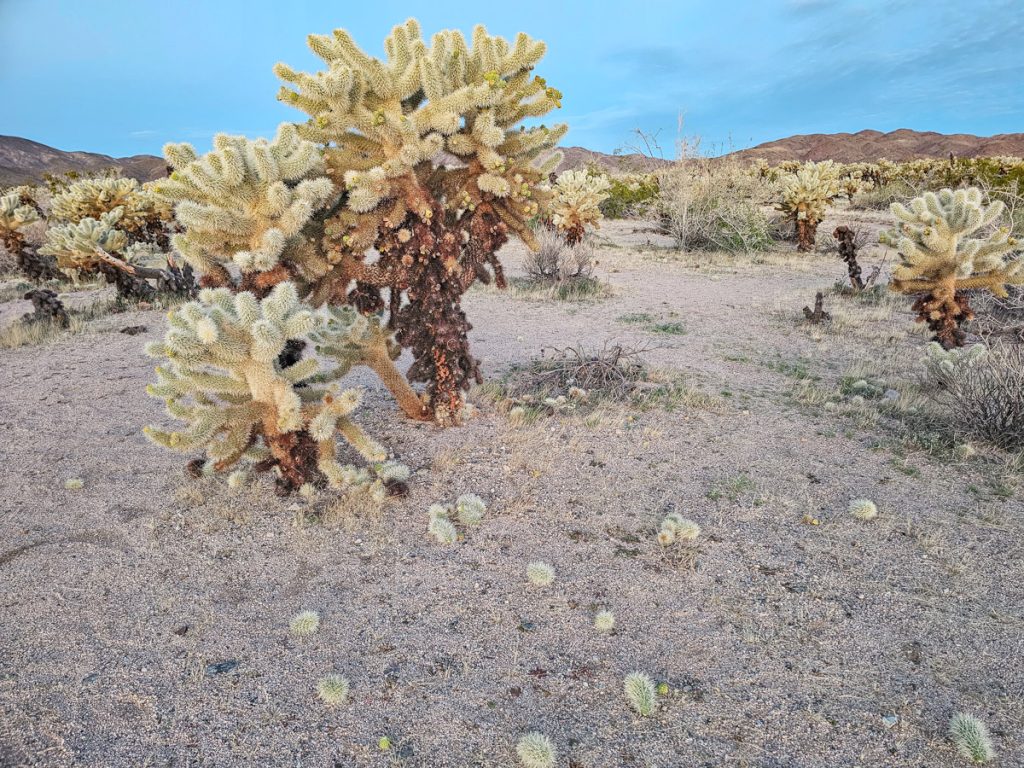
The Cholla Cactus Garden is one of the most incredible spots in Joshua Tree, especially at sunrise or sunset. It’s a massive field of cholla cactus stretching across both sides of the road, with thousands of these spiky plants spread across the valley floor as far as you can see.
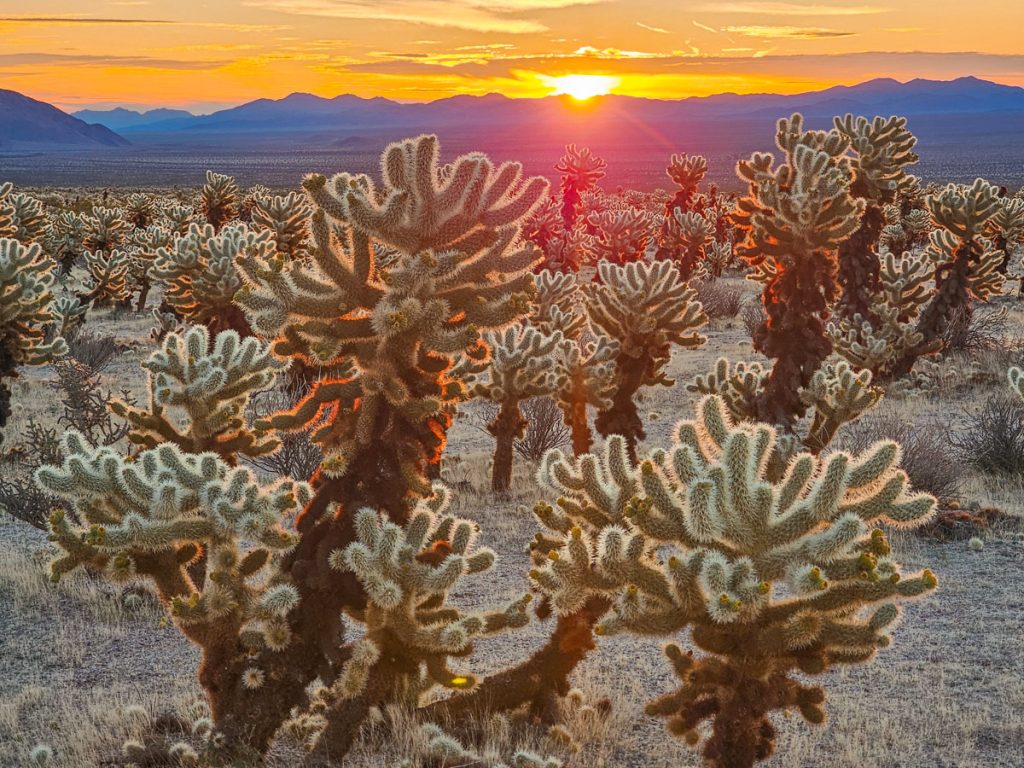
Cholla cactus are covered in long, dense spines that catch the light, and when they’re backlit by the sun the plants almost appear to glow. You can see cholla scattered around other parts of the park, but the high concentration in this area makes the effect much more dramatic.
There is normally a short nature walk through the garden, though it has been closed for a while and was still closed when I visited. Even without the trail, you can park along the roadside and walk out among the cacti. The plants are spaced out enough that it’s easy to move around while still keeping a safe distance.
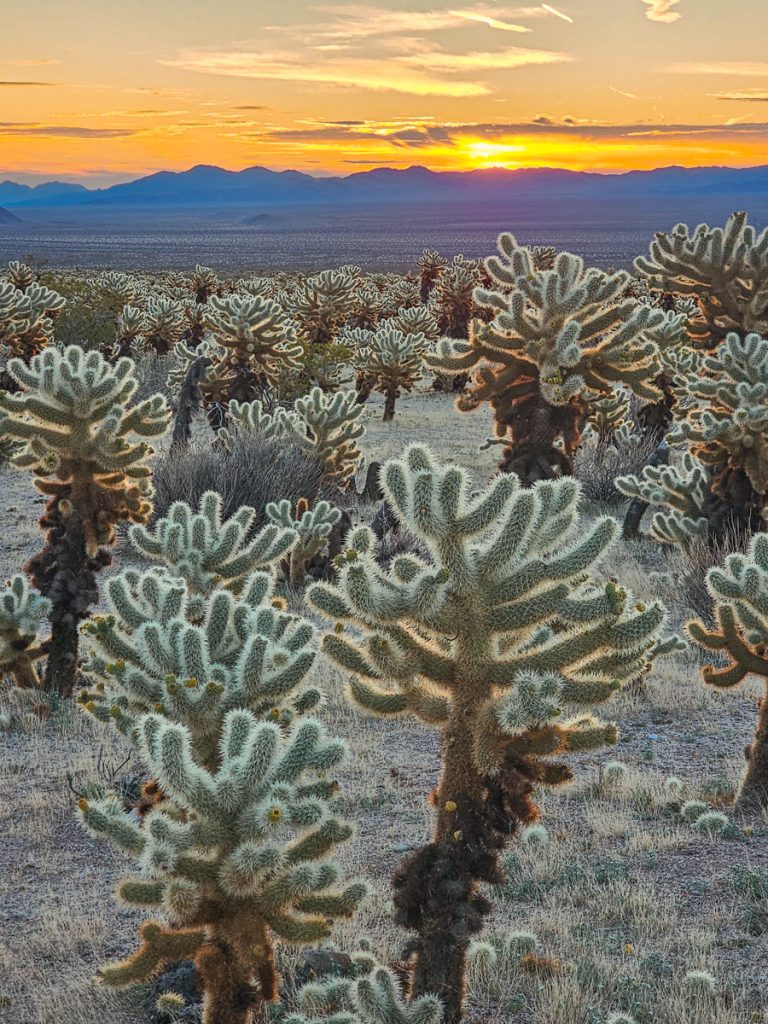
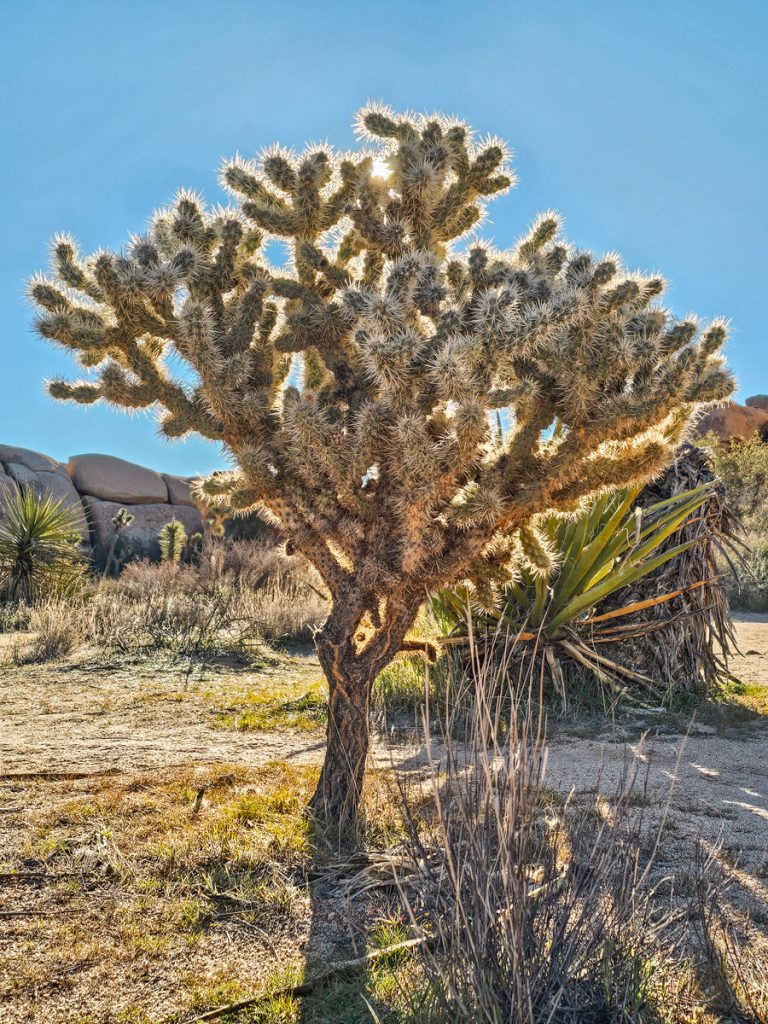
This spot works well for either sunrise or sunset since mountains surround the valley and you can position yourself in whichever direction you want. Sunset tends to be busier, while sunrise is quieter. When I arrived about 15–20 minutes before sunrise, there were maybe eight cars there and everyone had plenty of space to spread out.
Watching the early light illuminate the cactus grove, and then the sun slowly peek above the mountains, flooding the cacti in a warm morning glow, was pretty magical.
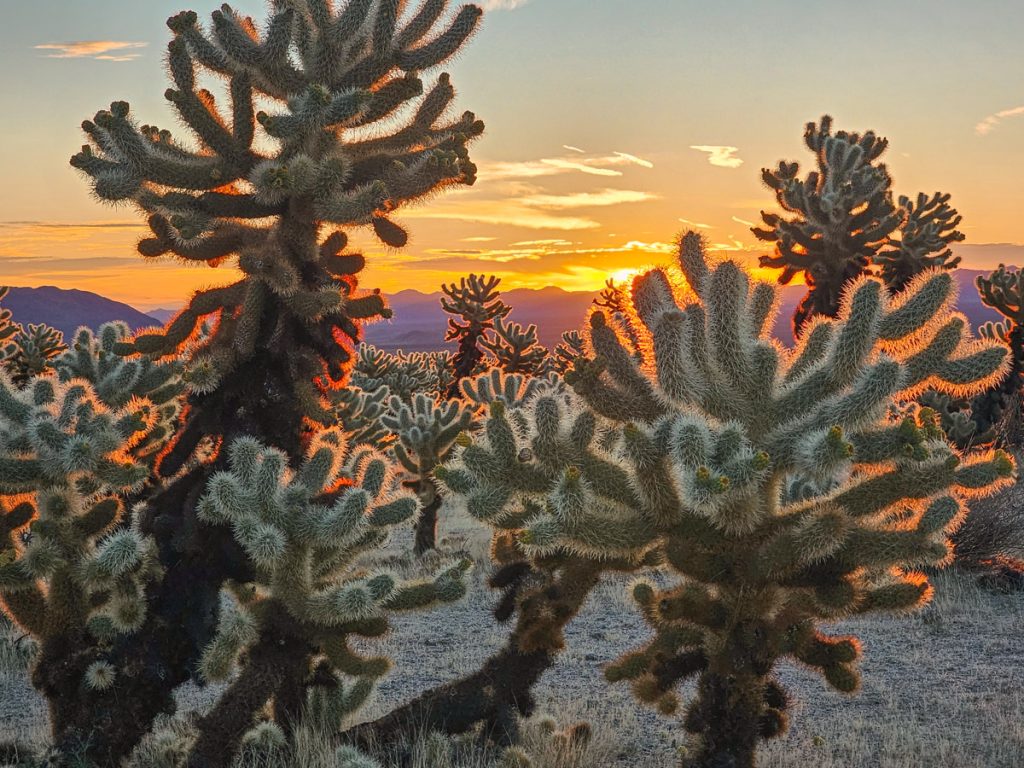
One important thing to know is that these are the infamous “teddy bear” cholla, which look soft and cute but are anything but. The spines latch on extremely easily if you brush against them. The plants themselves are spaced out enough that they’re easy to avoid, but the bigger hazard is the small “puffballs” that are scattered around the ground.
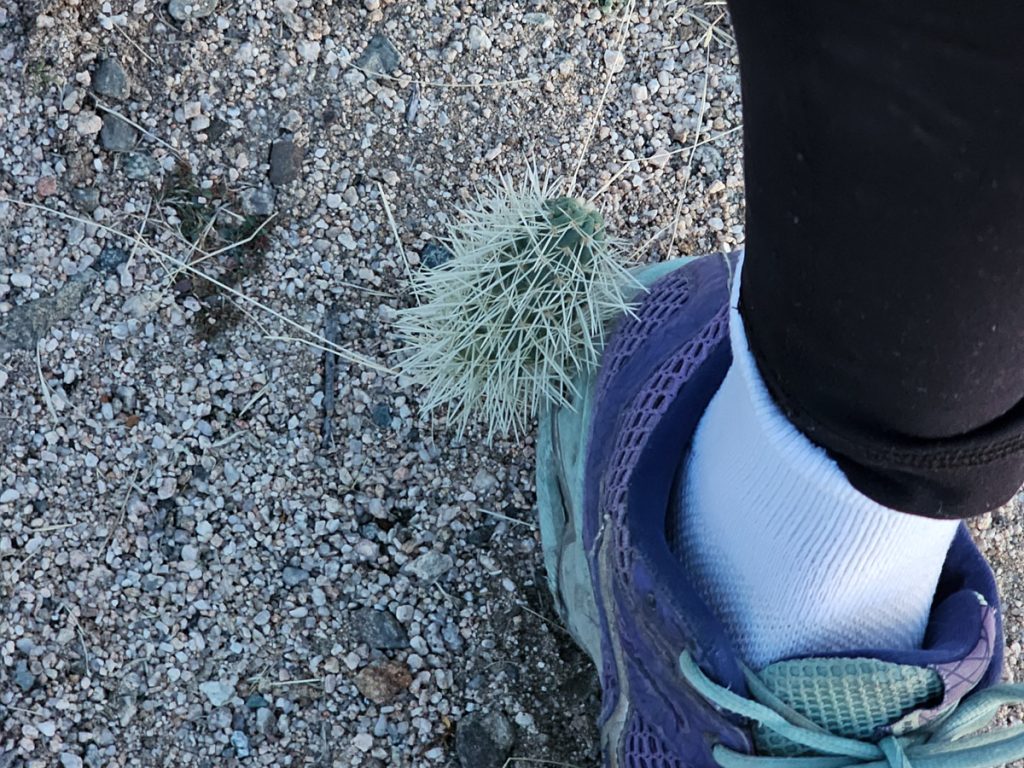
I actually saw one woman accidentally step into one of those pieces, and I managed to snag one on my shoe too. Thankfully it only attached to my sneaker and barely brushed my leg, but I had to knock it off with a rock and later pull the remaining spines out of my shoe with tweezers. The spines had stuck surprisingly deep, so it’s definitely worth being careful while walking around the garden.
Longer Hikes in Joshua Tree
There are several longer or more strenuous hikes in Joshua Tree – these are three that I did.
11. Fortynine Palms Oasis Trail
Trail Stats: 3 miles round trip, 600 feet elevation gain, moderate difficulty
This hike is part of the national park, but it sits outside the main “gated” park entrances, with the trailhead located just off the main road in the town of Twentynine Palms.
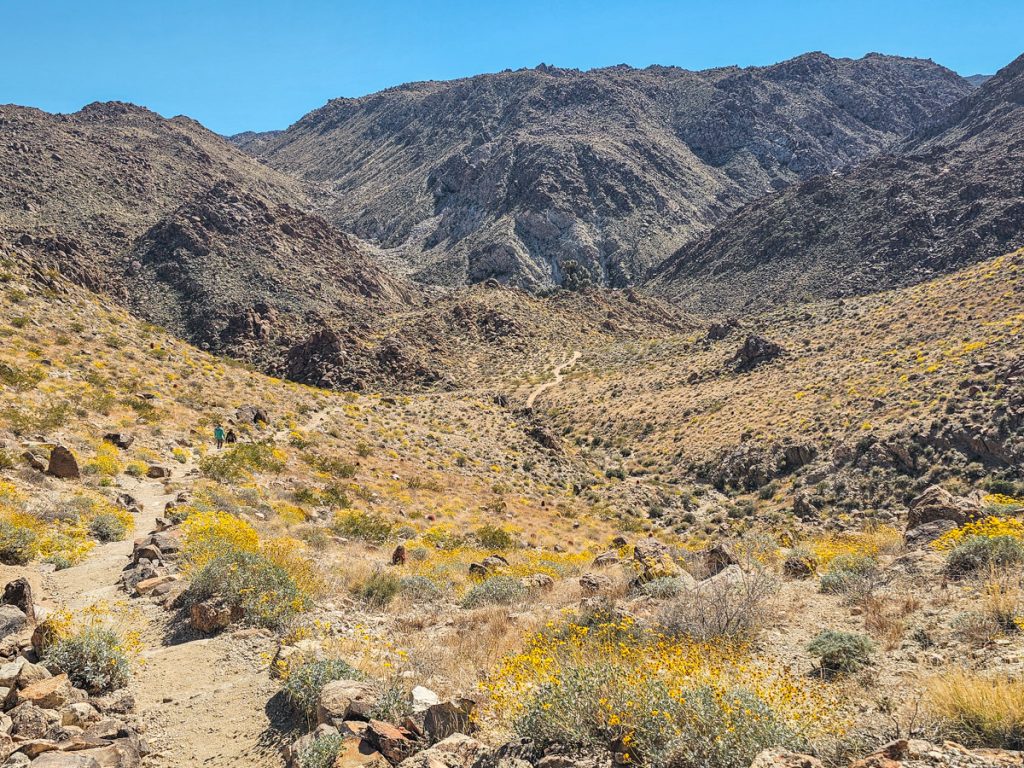
The trail takes you through rocky hills and down into a canyon to reach a fan palm oasis. There are several ups and downs on both legs of the hike, and the trail is completely exposed until you reach the palms.
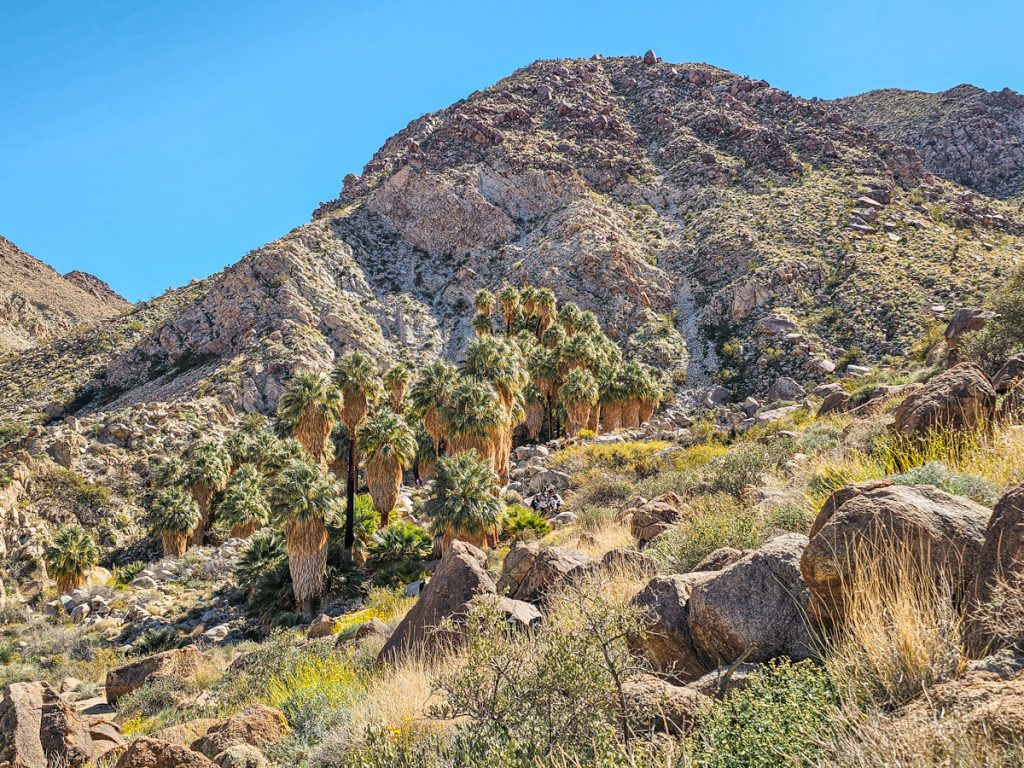
I actually really enjoyed this hike and think it’s one of the more interesting ones in Joshua Tree. You hike toward the mountains, climbing up and down a few ridges, and you don’t actually see the oasis until you’re pretty close to the end. There’s this feeling of “where is it hiding?” and then suddenly you spot a large cluster of palms tucked down in the canyon.
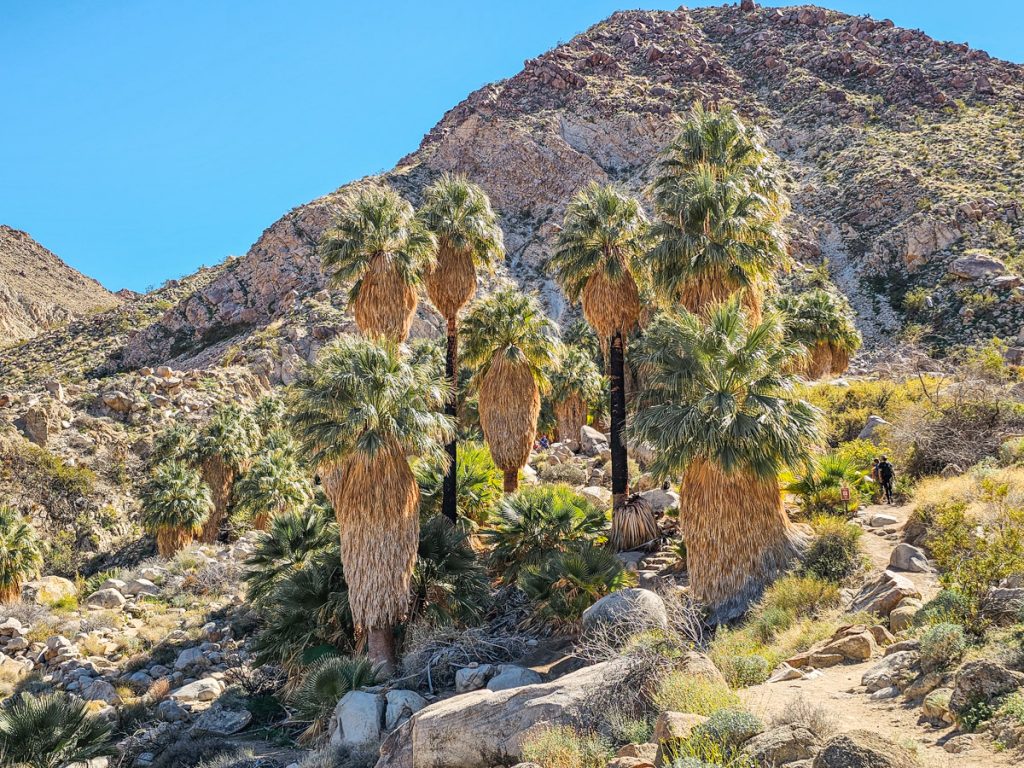
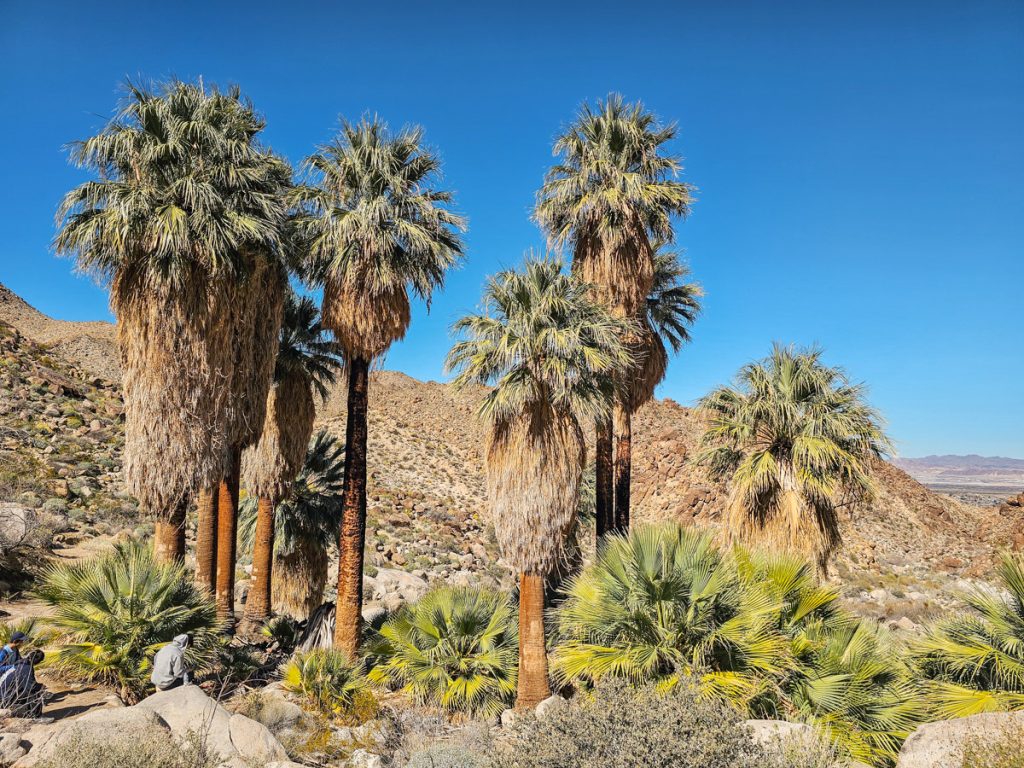
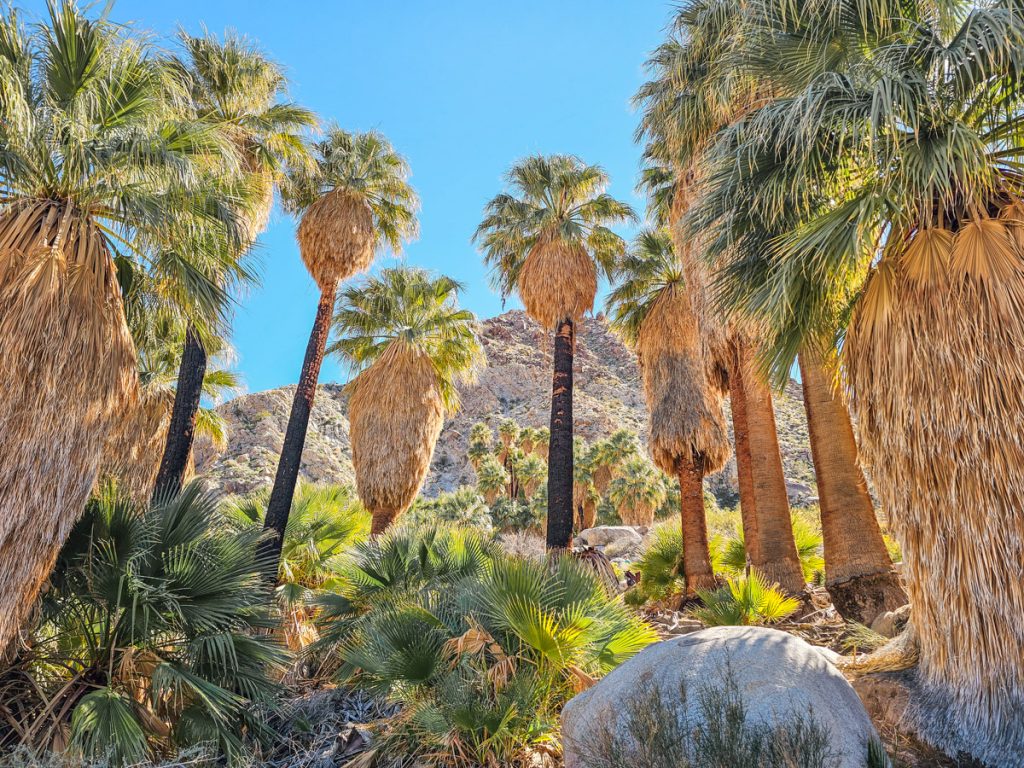
The oasis itself is really beautiful, with clusters of palm trees nestled among the rocks and canyon walls (although I personally did not see 49 of them…). There are also several large boulders nearby where you can sit, relax, and take in the views for a while before heading back.
12. Ryan Mountain
Trail Stats: 3 miles round trip, 1050 feet elevation gain, strenuous
Ryan Mountain is one of the best hikes in Joshua Tree, bar none. The trail climbs to the summit of a small mountain peak and rewards you with fantastic 360-degree views from the top. It’s short enough to feel accessible for many hikers, but steep and rugged enough that it still feels like a proper hike.
It’s a fairly steep climb most of the way up, with the path winding along the edge of the mountain before continuing up toward the summit. A good portion of the route follows stone steps built into the mountainside, mixed with stretches of dirt trail.
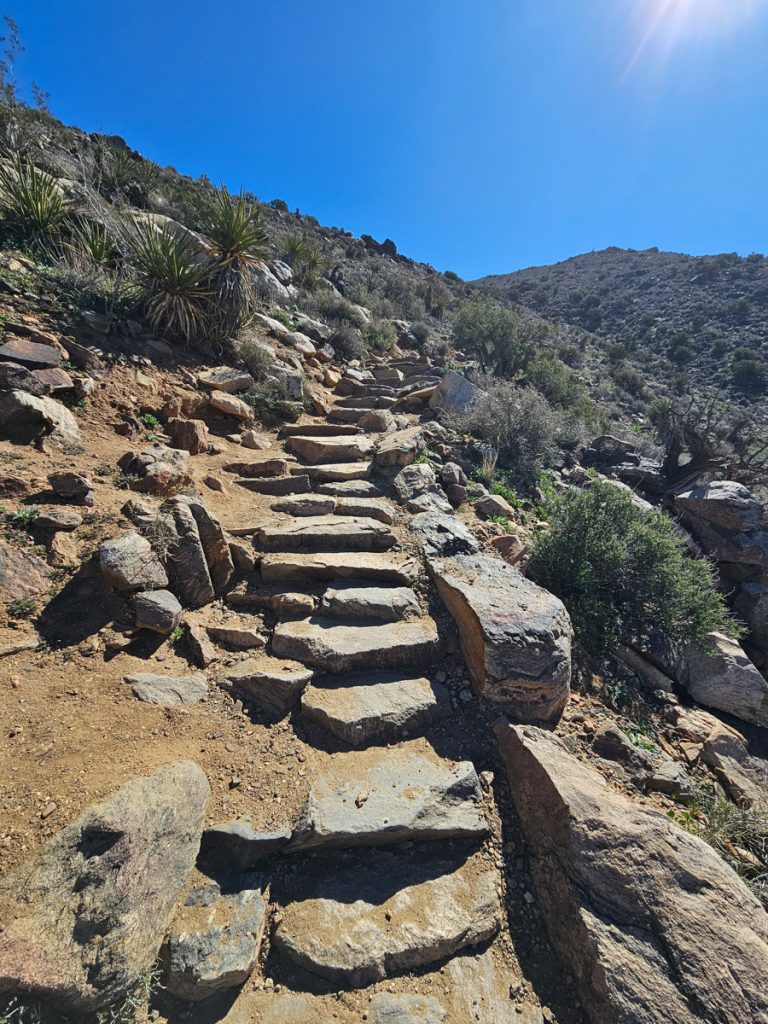
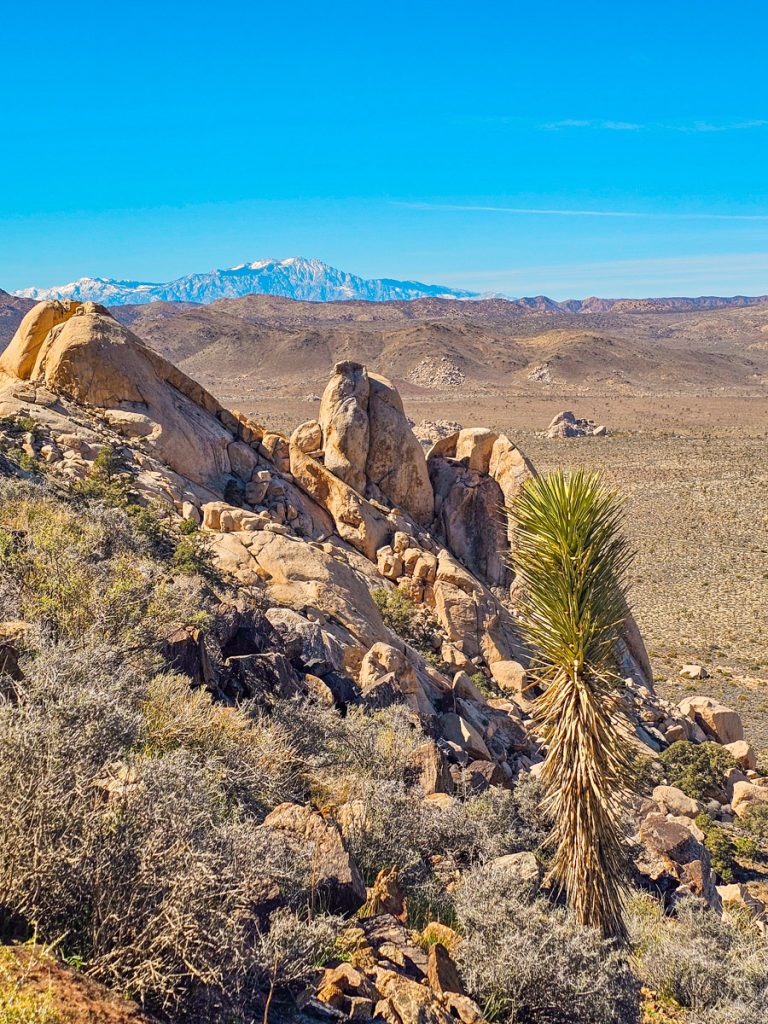
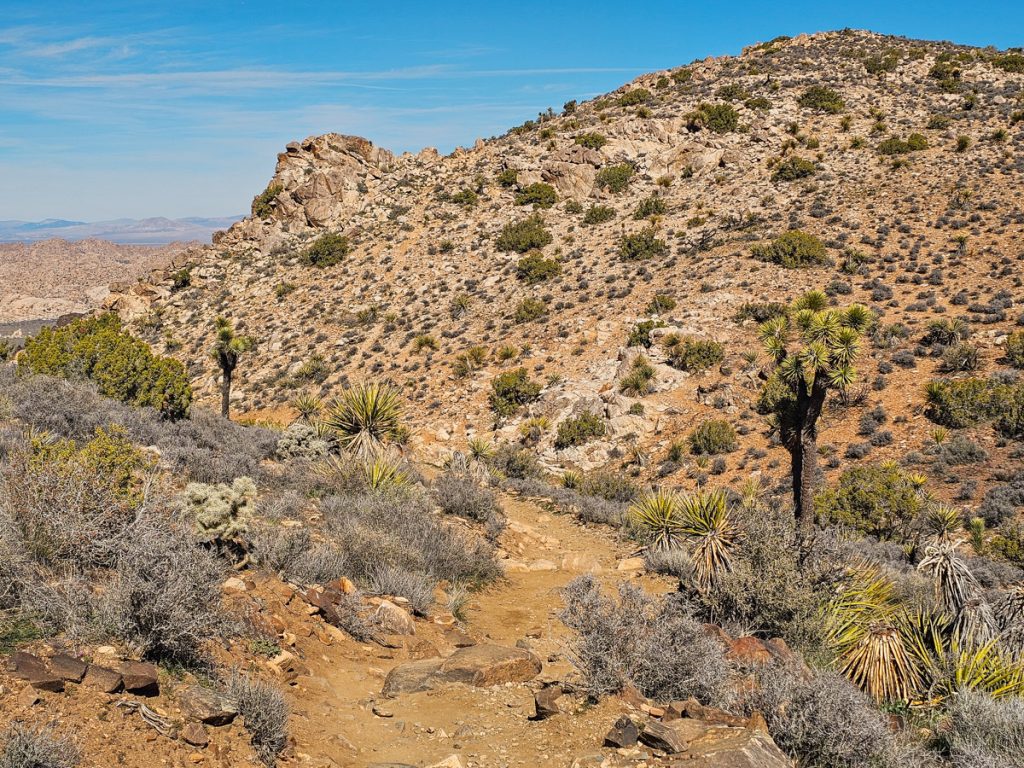
As you gain elevation, the views start to open up across the park. You’ll be able to look down on the massive clusters of granite boulders scattered across the valley floor, with rugged rocks and desert plants covering the slopes around you.
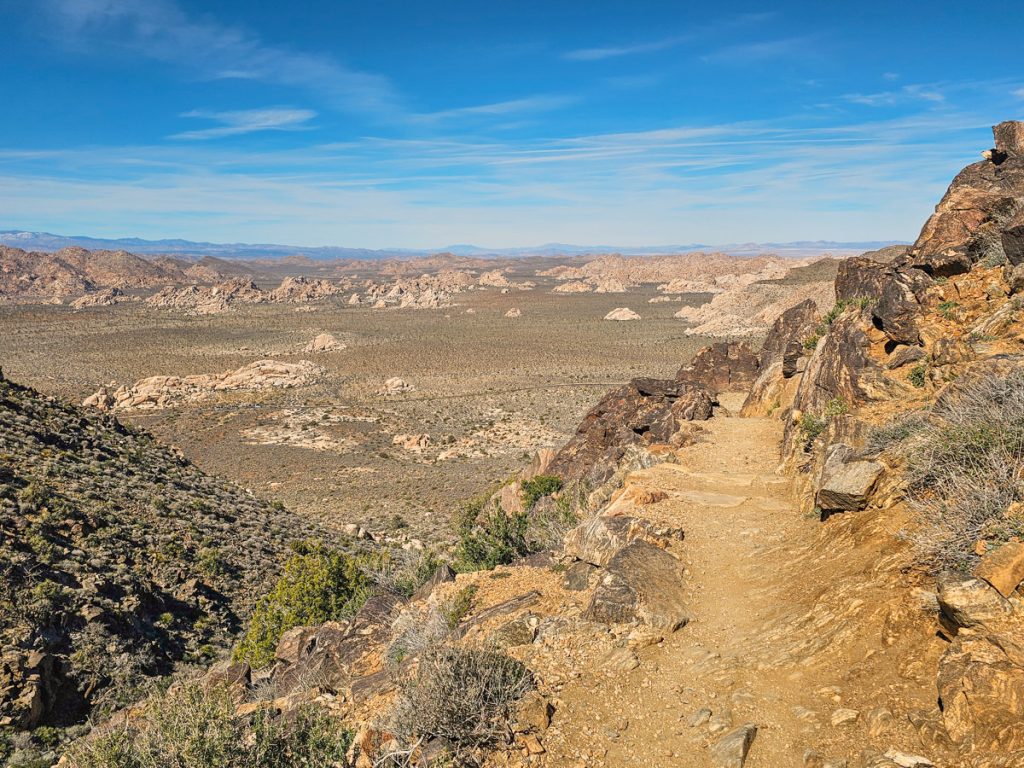
At the summit, you’re rewarded with wide panoramic views across Joshua Tree, including the surrounding mountain ranges, the Coachella Valley, and the San Andreas Fault stretching through the landscape. You’ll also see yucca plants, Joshua trees, and cholla cacti dotting the surrounding terrain. There are lots of rocks at the top where you can sit and take in the views for a while.
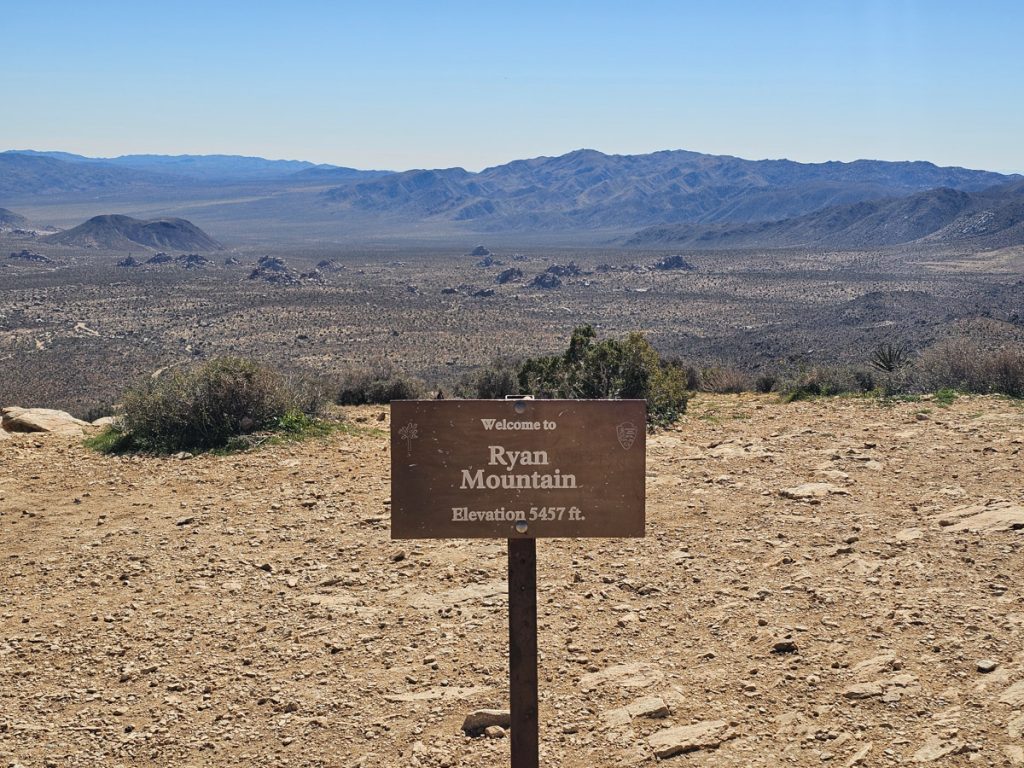
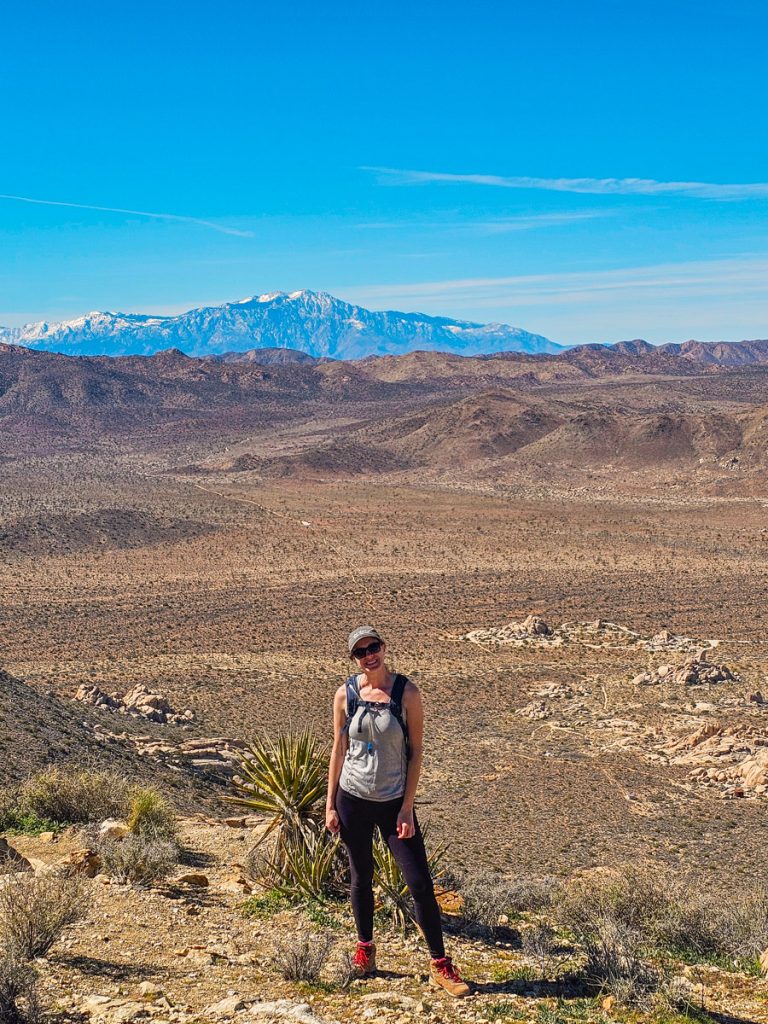
This is also a great hike to do at sunrise or sunset. Many people hike up in the dark to watch the sunrise from the summit, or hike up in the late afternoon to catch sunset and then head down as the light fades. Watching the sun drop over the desert from the top is a fantastic experience. Just make sure to bring a headlamp if you plan to hike in the dark.
13. Mine Hike Options
Joshua Tree was part of the California Gold Rush, and the park still contains several historic mining sites from the late 1800s. A few of these can be reached by hiking trails, and if you’re interested in the area’s history it’s fun to visit at least one of them.
Originally I was planning to hike to Lost Horse Mine, which is one of the most famous and well-preserved mining sites in the park. That trail is about 4 miles round trip with roughly 500 feet of elevation gain. The mine produced around 9,000 ounces of gold and is considered one of the best preserved mills of its kind within the National Park system. It’s also one of the more popular mining hikes in Joshua Tree.
Another option nearby is the Wall Street Mill hike, which is a shorter 1.8 mile flat walk that starts from the same parking lot as Barker Dam. This hike takes you to the remains of a historic gold milling site, including old rusted cars and pieces of equipment from the mining days. If you want a quick and easy historical hike, this is a solid option.
Because of how my timing worked out that day, I ended up doing the Desert Queen Mine hike instead. This trail is about 2.9 miles round trip with roughly 400 feet of elevation gain and is noticeably less busy than many of the other trails in the park.
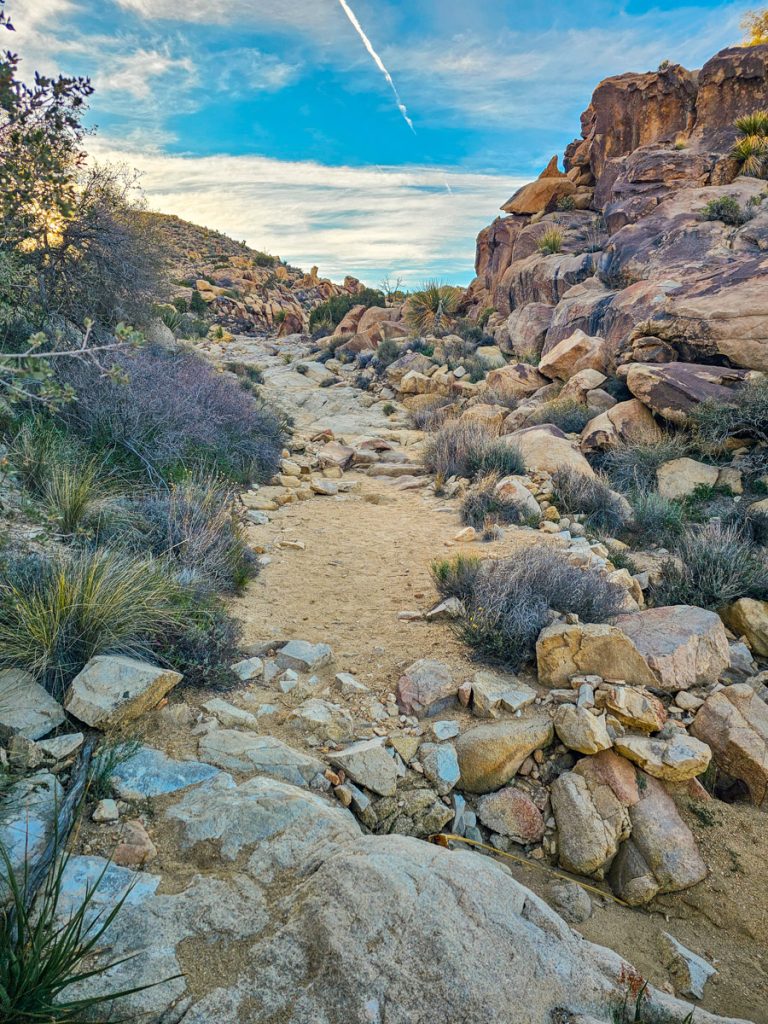
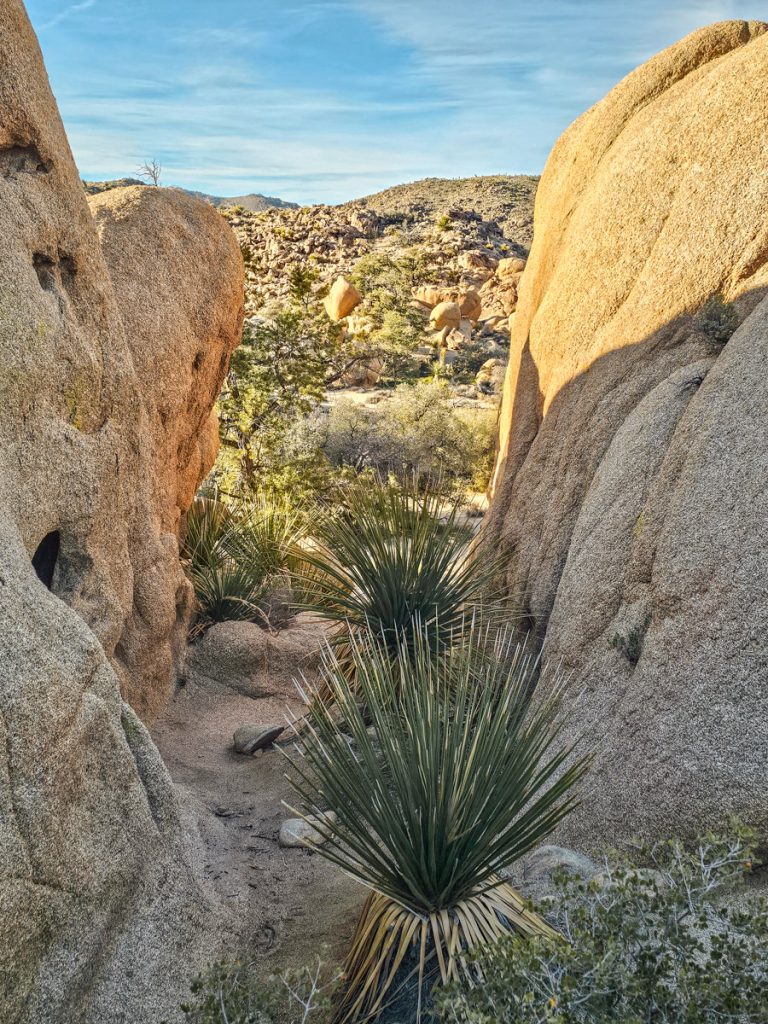
The hike takes you up and down over several rocky ridges, and along the way you pass several old mining shafts that are now covered with metal grates. You’ll also see a few pieces of old mining equipment scattered along the trail, which makes it interesting to imagine what the area looked like when these mines were active.
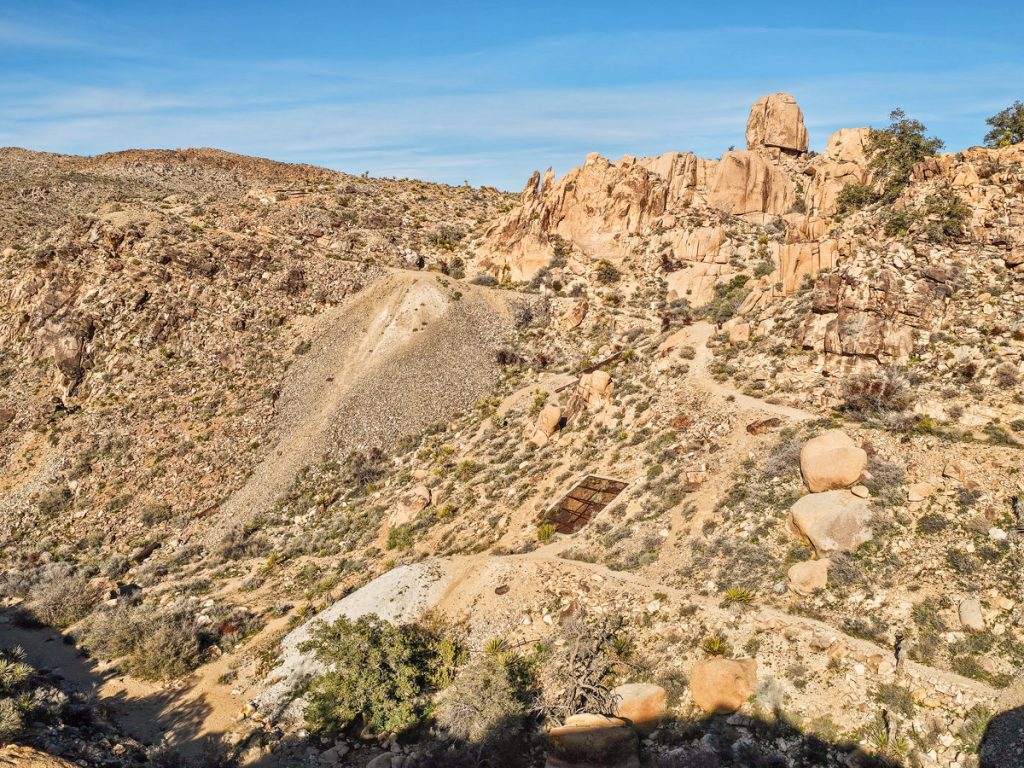
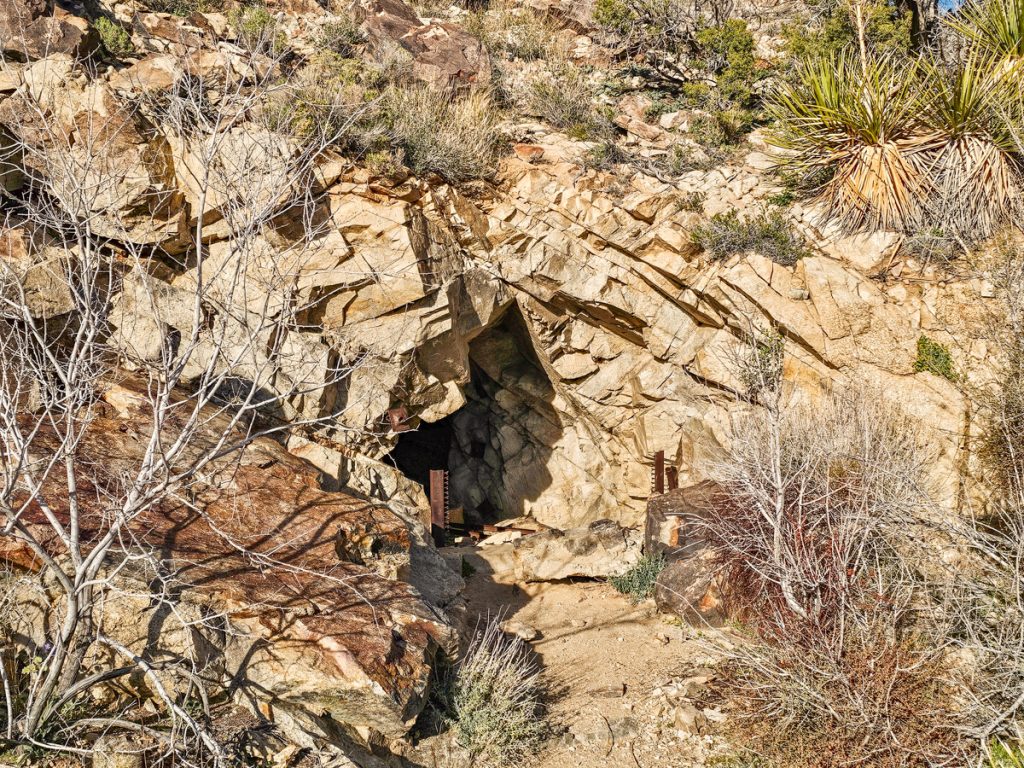
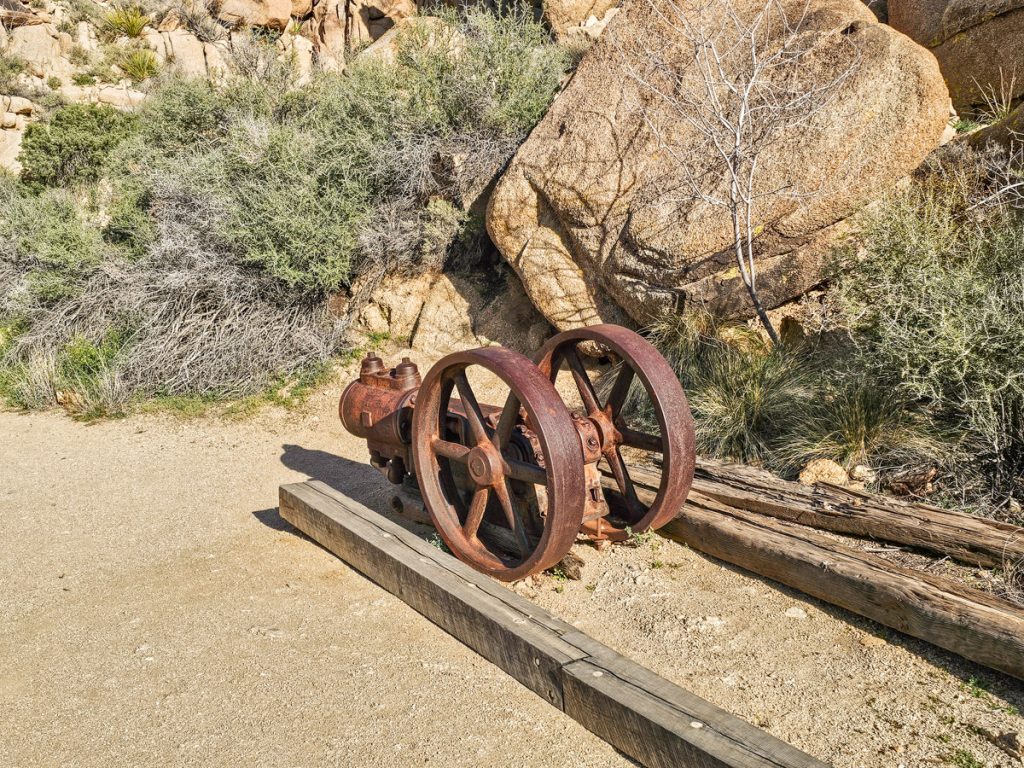
If you continue a little past the end of the marked AllTrails route, you can also reach the Boulder House, an old homesteading cabin built among the rocks. This adds roughly another half mile round trip. I ended up running out of daylight and didn’t make it all the way to the cabin, which was disappointing because it looked like a really interesting spot.
One thing to be aware of with this hike is that the trail isn’t well-marked in several places. There are a few spots where the path splits and it’s not at all obvious which direction to go. I had to backtrack several times and was very glad I had the AllTrails map downloaded.
Overall it was a nice hike and it was interesting to see several mining shafts along the way. That said, if I were doing it again, I would probably prioritize the Lost Horse Mine Trail instead – the mining structures look really cool.
If you want a shorter historical walk, Wall Street Mill is a great option. If you’re up for something a little longer with one of the park’s most notable mining sites, Lost Horse Mine is probably the better choice.
Where to Stay When Visiting Joshua Tree
Hotels Near Joshua Tree
There are quite a few towns next to the borders of Joshua Tree with many accommodation choices. Here are 3 great options:
The Bungalows by Homestead Modern: A really scenic property just outside the West Entrance, made up of individual bungalows and phenomenal views.
Holiday Inn Express: If you’re looking for something basic just to crash in, there are a lot of options in the town of Twentynine Palms, which is just outside the North Entrance. The Holiday Inn Express is a solid pick from the hotel lineup here.
28 Palms Ranch: For a more unique stay, book a yurt for a glamping experience. These glampsites are secluded in the desert, have outdoor showers, grilling and fire equipment, and are an incredible spot for stargazing.
Camping Inside Joshua Tree
Joshua Tree has eight campgrounds with more than 500 campsites in total. Many of them are set right among the park’s rocky boulder piles, which makes for some incredibly scenic camping spots. Five campgrounds take reservations, while three operate on a first-come, first-served basis.
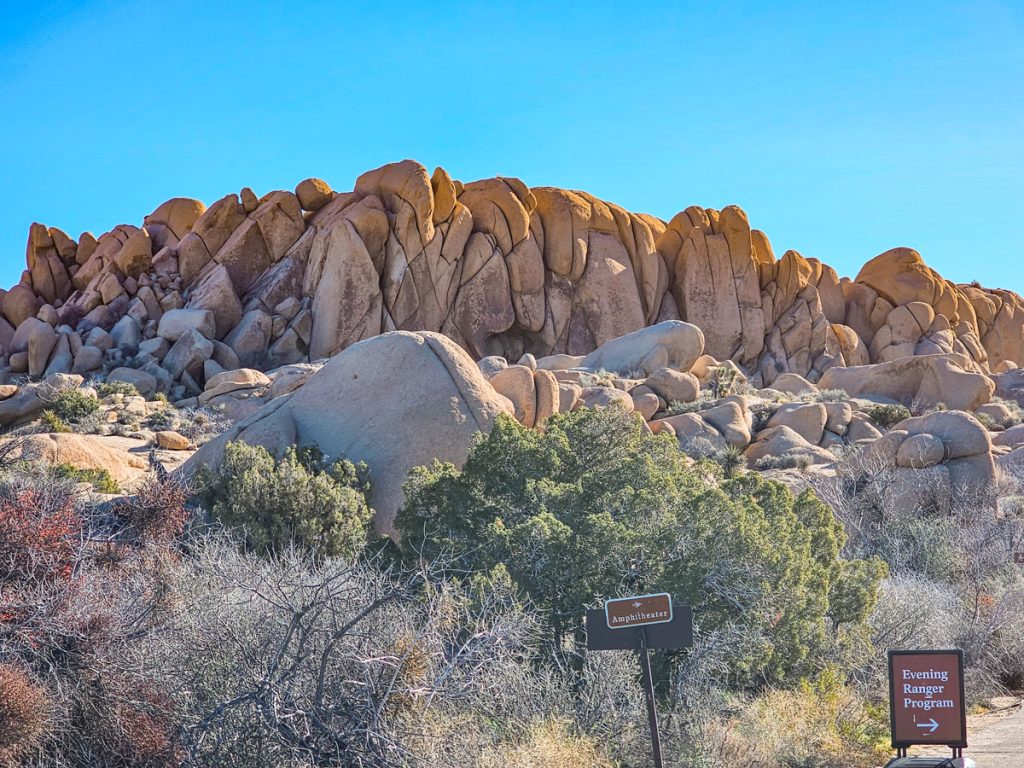
Belle, White Tank, Hidden Valley, Ryan, and Jumbo Rocks are all centrally located within the park and provide easy access to many of the main trails and viewpoints. Indian Cove, Black Rock, and Cottonwood sit on the edges of the park and require a longer drive to reach most of the main attractions. In fact, Indian Cove and Black Rock are not directly connected to the park’s main road network, so you’ll need to exit and re-enter through one of the official park entrances to reach the central areas.
For complete details on campground locations, availability, and reservations, check the official Joshua Tree camping page.
Catch a Sunrise or Sunset
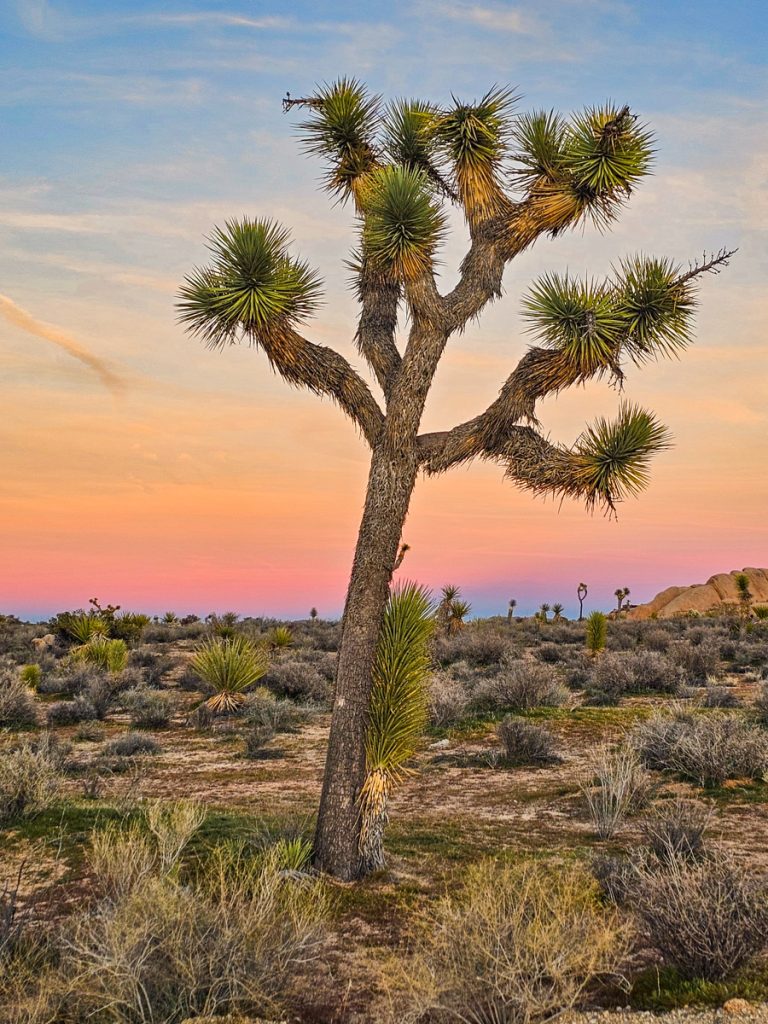
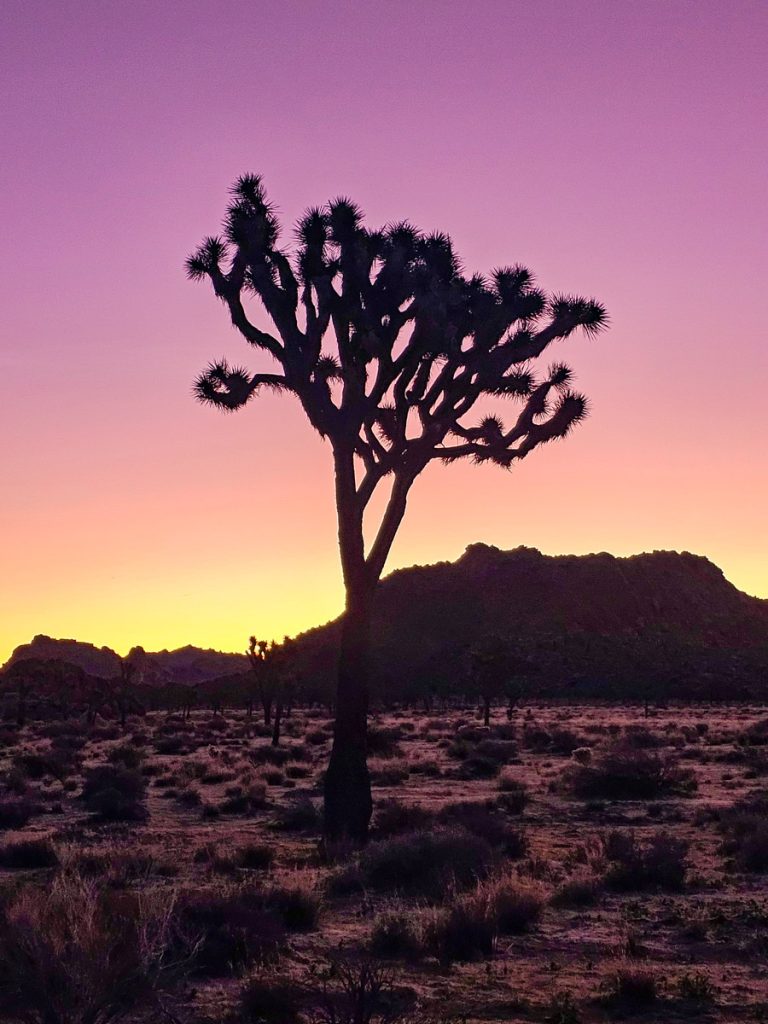
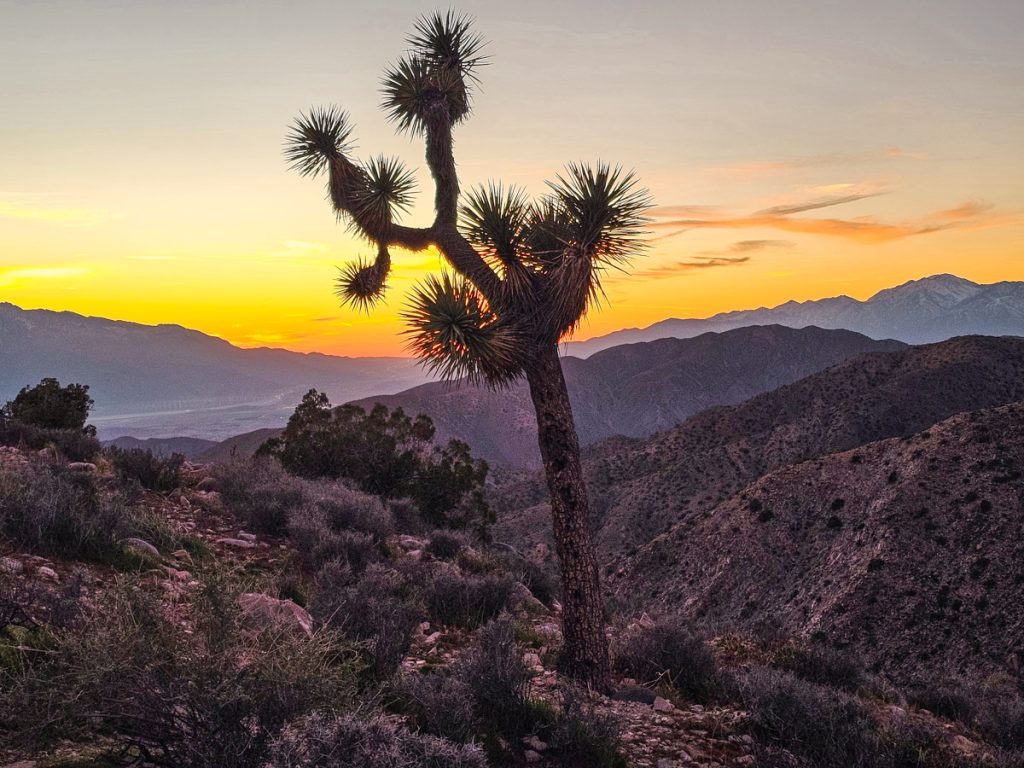
Sunrise and sunset are beautiful in any national park, and Joshua Tree is no exception. The trees look their best in that soft pre-sunrise or post-sunset glow, so I’d try to plan at least a couple of these moments into your visit.
I’ve mentioned several of these within the post itself, but I’ll still list out some options here:
Good sunrise spots:
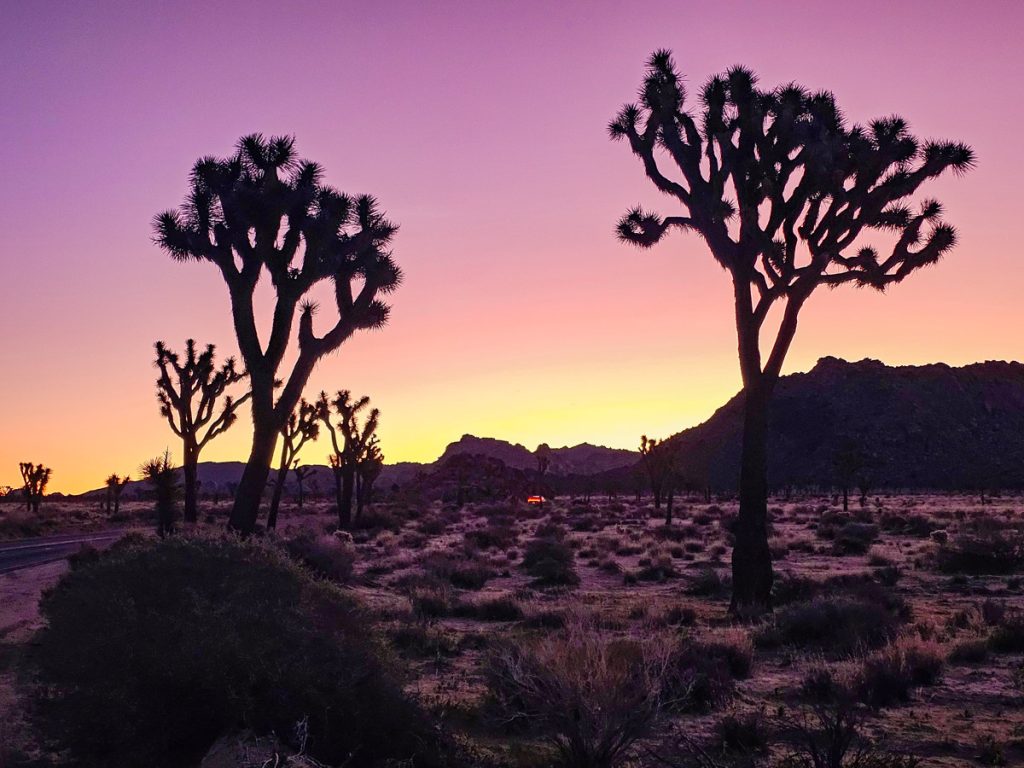
- Pullouts along the first 15 minutes of Park Boulevard – I was near the Quail Springs area (picture above)
- Hidden Valley
- Cholla Cactus Garden
- Ryan Mountain
- Arch Rock
Good sunset spots:
- Key’s View
- Ryan Mountain
- Cholla Cactus Garden
- Pullouts along Park Boulevard – I was between Jumbo Rocks and Queen Valley Road (below picture)
Best Time to Visit
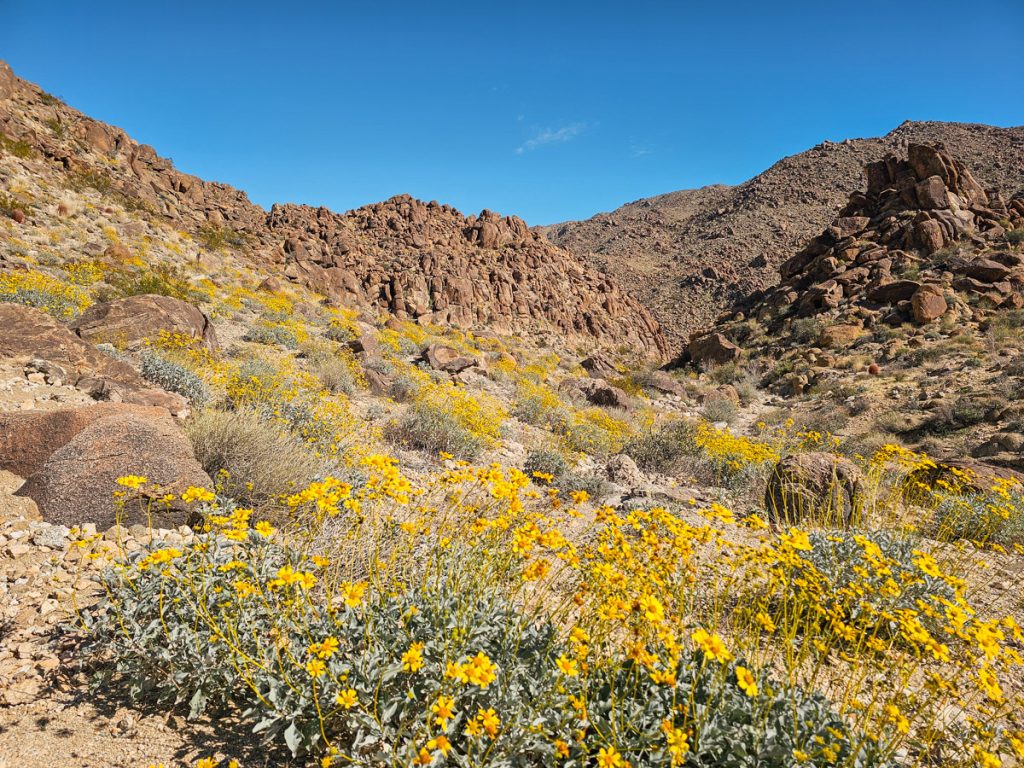
Fall and spring are generally the most comfortable times to visit Joshua Tree. Daytime temperatures usually range from about 70–85°F, which makes it a great time for hiking, exploring the nature trails, and scrambling around the boulder piles. Late winter and spring are also a great time to see wildflowers.
Winter can also be a really nice time to visit. I was there in February, and while the nights were definitely chilly, the daytime weather was lovely, with cool but comfortable temperatures for being outside. Winter highs are usually around 60°F, though nights can drop to freezing or below. Snow is uncommon but can occasionally dust the higher elevations.
Summer is much tougher, as it gets extremely hot (100°F or more), and even nighttime temperatures usually stay warm, often near 75°F. If you do visit in summer, you’ll want to plan most activities very early in the morning or close to sunset and avoid the longer hikes and walks.
One other consideration is that Joshua Tree is actually quite close to many cities and towns. Quite a few small towns border the park, Palm Springs is 45 minutes away, the LA area is 2-3 hours away, and San Diego is 3 hours away.
Because of this proximity, the park sees a big surge of visitors on weekends. If you can plan your visit for the middle of the week, you’ll usually find a quieter experience.
How Many Days Do You Need?
I spent two full days in Joshua Tree, and was able to do all the things discussed on this list. It was a fantastic couple of days. That said, you could easily enjoy the highlights in just one day.
With one day, I would prioritize:
- Hidden Valley
- Arch and Heart Rock
- Cholla Cactus Garden
- Ryan Mountain OR Key’s View (both give panoramic views, just depending on whether you want a hike or a drive up)
You may also have time for 1-2 other nature walks, depending on your time and stamina.
Do You Need Reservations to Visit Joshua Tree?
No timed entry reservations are required to visit Joshua Tree or do the trails on this list.

![How to Spend 4 Perfect Days in San Diego [Itinerary]](https://usadventurer.com/wp-content/uploads/2023/08/coronado-island-beach-sidewalk-san-diego-california-768x576.jpg)